Table of Contents
- Start With What Your Child Loves
- Is the Barrier Interest or Reading Difficulty?
- Compare Real Sample Pages
- Try Reading Together
- Choose a Series by Interest
- Find the Book That Gets Them Reading
- Frequently Asked Questions About Reluctant Readers
The best way to choose a chapter book for a reluctant reader ages 8 to 12 is to start with something your child already likes, then test it on a real sample page. Pick a topic they would choose on their own, such as camping, space, gaming or mysteries, and read the first pages together. Then check two more things: whether they can read it on their own without stalling on many words, and whether the format feels manageable. Format means chapter length, page layout and whether there is a next book waiting. If words are the bigger problem than interest, a different format, such as read-aloud, an audiobook or a graphic novel, may be a better first step than a harder book.
This guide is for parents of kids who say books are boring, quit after a few pages, or dodge reading altogether. Scholastic Parents notes that enthusiasm for reading tends to dip around age 9, so you are not alone.
Reluctance rarely has one cause, so the steps below help you work out which one you are dealing with.
Start With What Your Child Loves
What would your child happily talk about for ten minutes? It might be a video game, a sport, space, fishing or a family camping trip. Write down two or three answers, because each one is a doorway into a book!
Let your child pick from a short list rather than choosing for them. The Australian government's Learning Potential site advises letting kids choose, and says comics, magazines and topics they care about all count significantly. Reading Rockets, a national literacy service, adds that books on topics a kid's peers are reading can motivate readers who find reading hard.
A sample beats a cover or a description every time. Open a free "read inside" PDF for any book that fits an interest and read the first page together. Within a minute you will see whether the voice, the humor and the pace are something your child wants more of.
Is the Barrier Interest or Reading Difficulty?
There are two different problems that both sound like "I hate reading." A child who reads smoothly but finds books dull needs a better match. A child who finds reading tough needs support, and a more exciting book will not replace it.
Some kids have both.
Try this with a book your kid chose. Ask them to read one page aloud, then ask what happened.
-
Interest problem: they read the page without much trouble, retell it fine, and say it is boring or not their thing. Change the topic or voice, and try a series.
-
Difficulty problem: they stall on many words, lose their place, guess at words, avoid reading aloud, or cannot retell what they just read. Move to shared reading, or a lower-pressure format, and see the next section on when to ask for help.
A child who loves a topic may handle a harder book, and a child who is worn out may struggle with an easier one. The page-aloud test tells you more. (Our Accelerated Reader book chart lists the AR details for our titles.)
If the page was hard, that is information, not failure. Graphic novels can give struggling readers books they can succeed with, and that audiobooks let kids enjoy a story and build listening skills. We cover that trade-off in Graphic Novels vs Chapter Books for Kids.
Compare Real Sample Pages
Two books on the same topic can feel completely different on the page.
Here is what you can see in the free sample for Book 1 of four Bakken series.
|
Book 1 sample |
Opening line |
Chapter length in the sample |
Voice and vocabulary |
Pace |
|
Grand Teton Stampede (The Campground Kids) |
"I ease toward a dead log, knowing everything hinges on complete silence." |
Chapter 1 runs about 15 pages (pages 5 to 19). Chapter 2 starts on page 20, and the sample ends on page 28. |
First person, present tense, narrated by 12-year-old Isaiah. Lots of dialogue and some less common words, such as apprehensive, mesmerizing and unison. Camping gear checklists appear in the text. |
Opens in suspense (stalking a cougar), moves to family banter and trip prep, and ends with a wolf sighting at the park entrance. |
|
The Iron Heart of Mars (Space Bound) |
"“Pull up, Ivory!” I yell to my nine-year-old sister." |
Chapters 1 to 3 are 5 pages each (pages 7 to 21). The contents list 23 chapters in the book. |
First person, present tense, narrated by 12-year-old Monty. Short sentences and quick dialogue. Space words such as rover and airlock appear in context, and a robot's light colors show its mood. |
Starts mid-crash, moves to a school scene, and reaches a hidden spaceship by the end of chapter 3. |
|
The Stream Team (Game On!) |
"It was the word “job” that first put the idea into my head." |
Chapter 1 is about 6 pages (pages 3 to 8) and chapter 2 about 4 (pages 9 to 12). The sample ends partway through chapter 3. |
First person, past tense, narrated by Wyatt, who jokes and speaks to the reader directly. Longer sentences, gaming slang such as noob and MMOs, and some bigger words, such as exasperation and rigorous. |
Slower start: Wyatt's gaming dream and plan first, then the hunt for teammates begins in chapter 3. Humor carries it. |
|
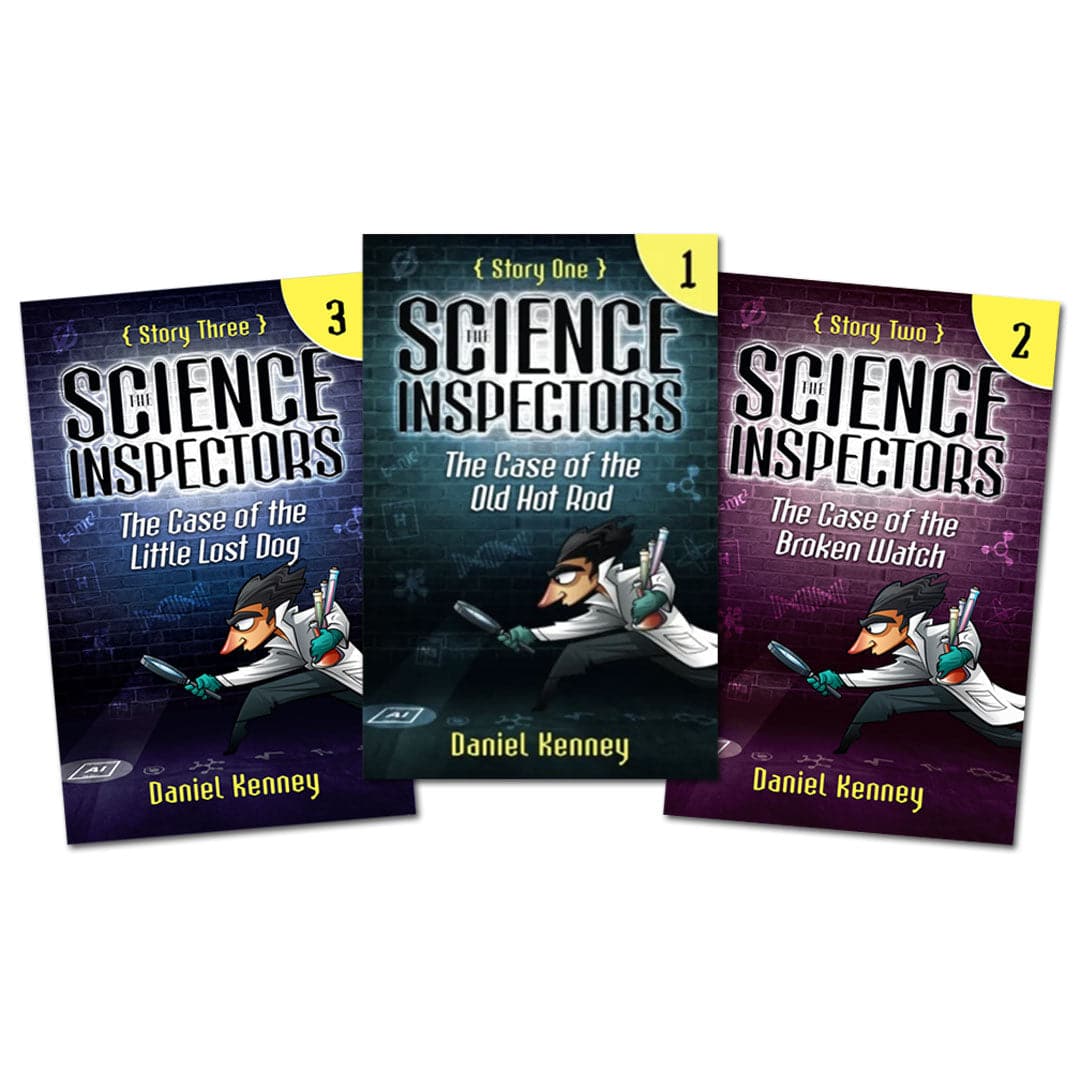
The Case of the Claymore Diamond (The Math Inspectors) |
"A phone rang in a dark room, but the figure sitting nearby did not answer." |
Chapter 1 is 4 pages, chapter 2 is 16, chapter 3 is 18. Across 12 chapters, Book 1 averages about 11 pages. |
Third person, four friends trading fast jokes, with pop-culture references. Longer scenes and words such as meddlesome, picturesque and culprit. Book 1 ends with bonus math problems. |
A short, tense phone call, then a long chapter of banter before a robbery alert on a police scanner. |
Details for each series:
|
Series (bundle) |
Ages |
Grades |
Avg. pages |
Lexile range |
Accelerated Reader |
|
The Campground Kids (Books 1 to 5)
|
8 to 12 |
3 to 7 |
170 |
630 to 720 |
3 to 4 points |
|
Space Bound (Books 1 to 5)
|
7 to 12 |
1 to 4 |
112 |
480 to 540 |
In progress |
|
Game On! (6-pack)
|
8 to 12 |
3 to 5 |
136 |
In progress |
In progress |
|
The Math Inspectors (Books 1 to 5)
|
8 to 12 |
4 to 7 |
170 |
620 to 650 |
2 to 3 points, plus in progress |


Space Bound and Game On! have the shortest chapters in these samples, of about 4 to 6 pages. Space Bound also has the lowest published Lexile range and the shortest sentences. Grand Teton Stampede has a long first chapter, but it is action-heavy and full of dialogue. Game On! leans on humor and slang, and The Math Inspectors has the longest chapters of the four. None of that makes one book "better." It tells you which one is more likely to suit your child.
Parent Checklist: Test a Sample in Minutes
- Name two or three things my child would choose to talk about.
- Open a free sample for a book on one of those topics.
- Have my child read the first page aloud, or read it to them. Smooth, stumbling on many words, or avoiding it?
- Ask "What happened?" and see whether they can retell it in their own words.
- Find where chapter one ends. Does a stopping point arrive soon enough for my child?
- Look at the page together. Does my child say it looks inviting or crowded?
-
Check whether there is a next book if they like this one.
- If sounding out words, avoiding reading aloud, or retelling is hard across several books, talk to the teacher.
GET OUR FREE PARENT CHECKLIST! >>>
Try Reading Together
Reading together lowers the effort of getting started, and it works at this age. Kids who can read still enjoy being read to, and reading aloud turns reading into something social.
Here is a low-pressure way to run your first sample:
1. Choose a sample your child picked, and sit side by side so you can both see the page.
2. Take turns by page or by paragraph. Read the harder parts yourself.
3. Stop at the end of the chapter, or sooner if your child is fading. Leaving them wanting the next page is a good result.
4. Talk lightly: favorite part, funniest moment, what might happen next. Skip the quiz.
5. If they ask to keep going, hand them the next page, or keep taking turns.
If your kid loves a topic but the book is a stretch, reading it aloud together keeps the story going while their independent reading catches up.
Choose a Series by Interest
A series lets your child keep the same characters and setting from book to book, so there is less to figure out at the start of each new one. Below are four Bakken series, each paired with the sample to try first. If your child's interest is not here, use our interest quiz or browse books by interest.
Mystery or Outdoors: The Campground Kids, Books 1 to 5

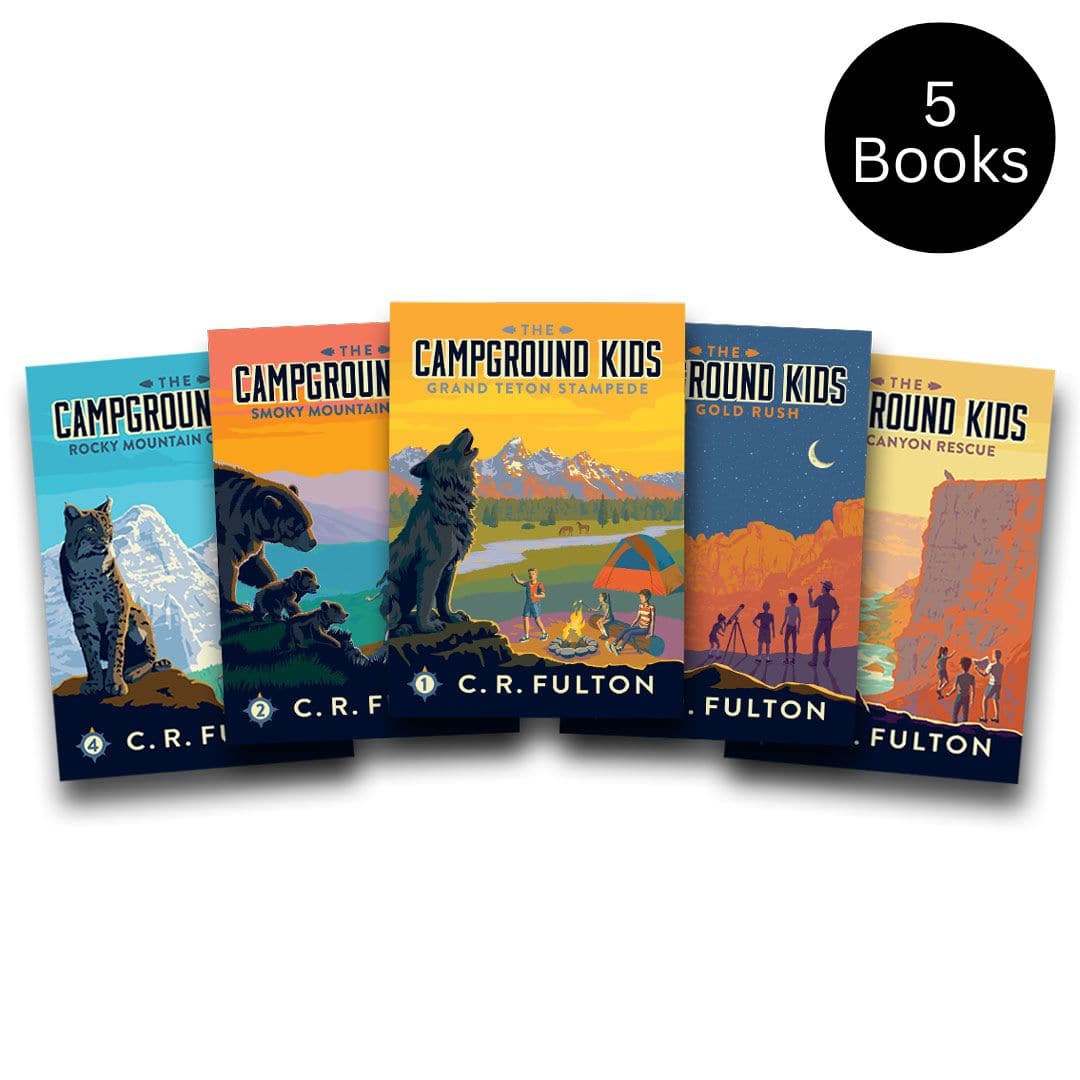
Start with the free sample of Grand Teton Stampede, which covers the first two chapters. The Books 1 to 5 bundle follows Isaiah, his sister Sadie and their cousin Ethan through five national parks: Grand Teton, Great Smoky Mountains, Zion, Rocky Mountain and Grand Canyon. Book 1 involves a stampede and stolen horses, and later books add treasure hunts and a puzzle box.
-
Good fit if: your child likes animals, camping, adventure and puzzles.
-
Keep in mind: books average 170 pages and chapter 1 of the sample runs about 15 pages, so plan to read the first chapter together.
-
Additional adventures: The adventure doesn't have to end there. There are many more National Park Adventure books in the series, along with our newest Campground Kids additions, Great Lakes Adventures and Lost City Adventures. Explore the full collection!
Space: Space Bound, Books 1 to 5

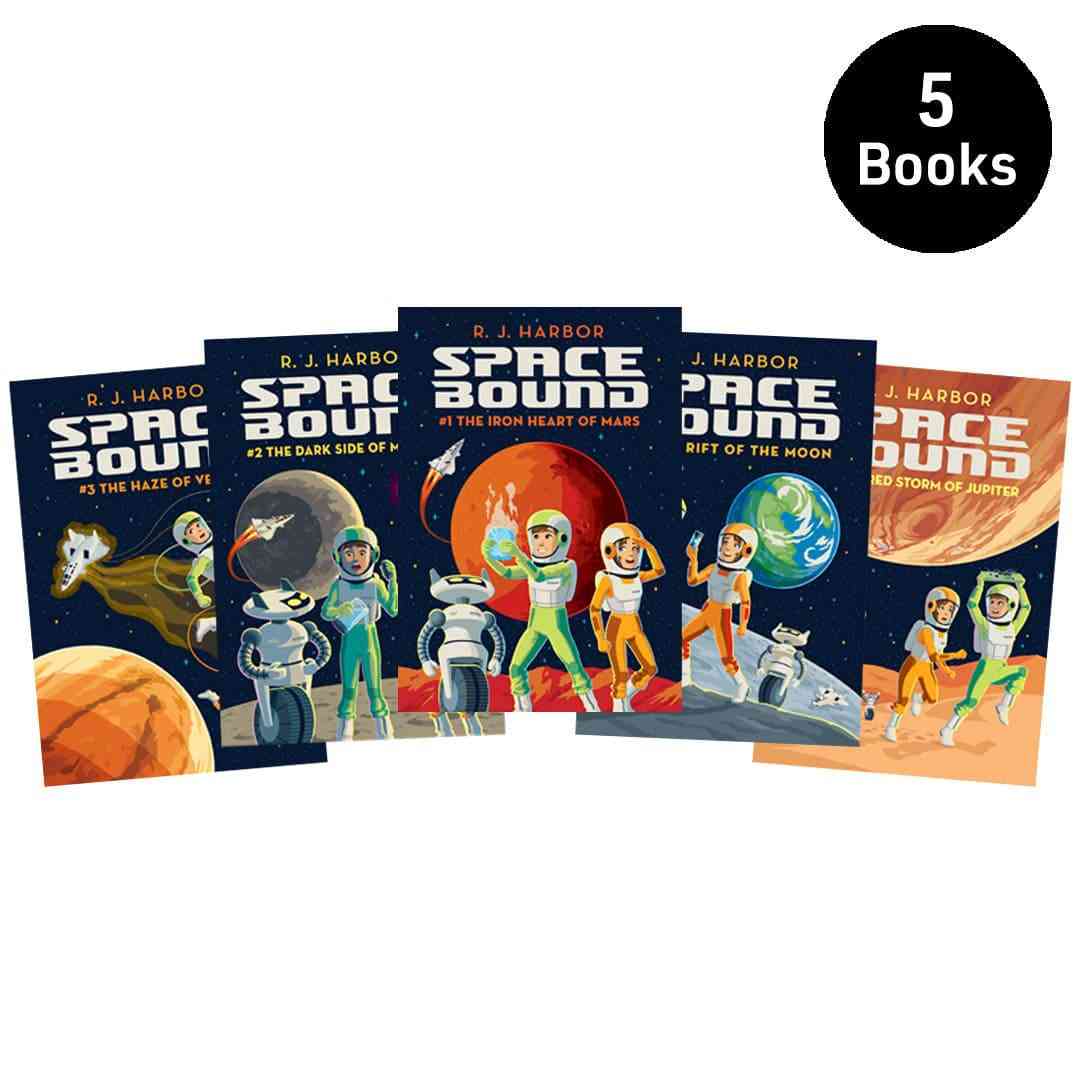
Start with the sample of The Iron Heart of Mars. In the Space Bound bundle, Monty, his sister Ivory and their robot Echo find a real rocket in the woods and end up on Mars, with later books visiting Mercury, Venus, the Moon and Jupiter.
-
Good fit if: your child likes space, robots and jokes, and needs chapters that end quickly. Chapters in the Book 1 sample are 5 pages each.
-
Keep in mind: the series is listed for ages 7 to 12 and grades 1 to 4, with a Lexile range of 480 to 540. Check that the sample feels right for your child's age.
Gaming: Game On!, 6-pack

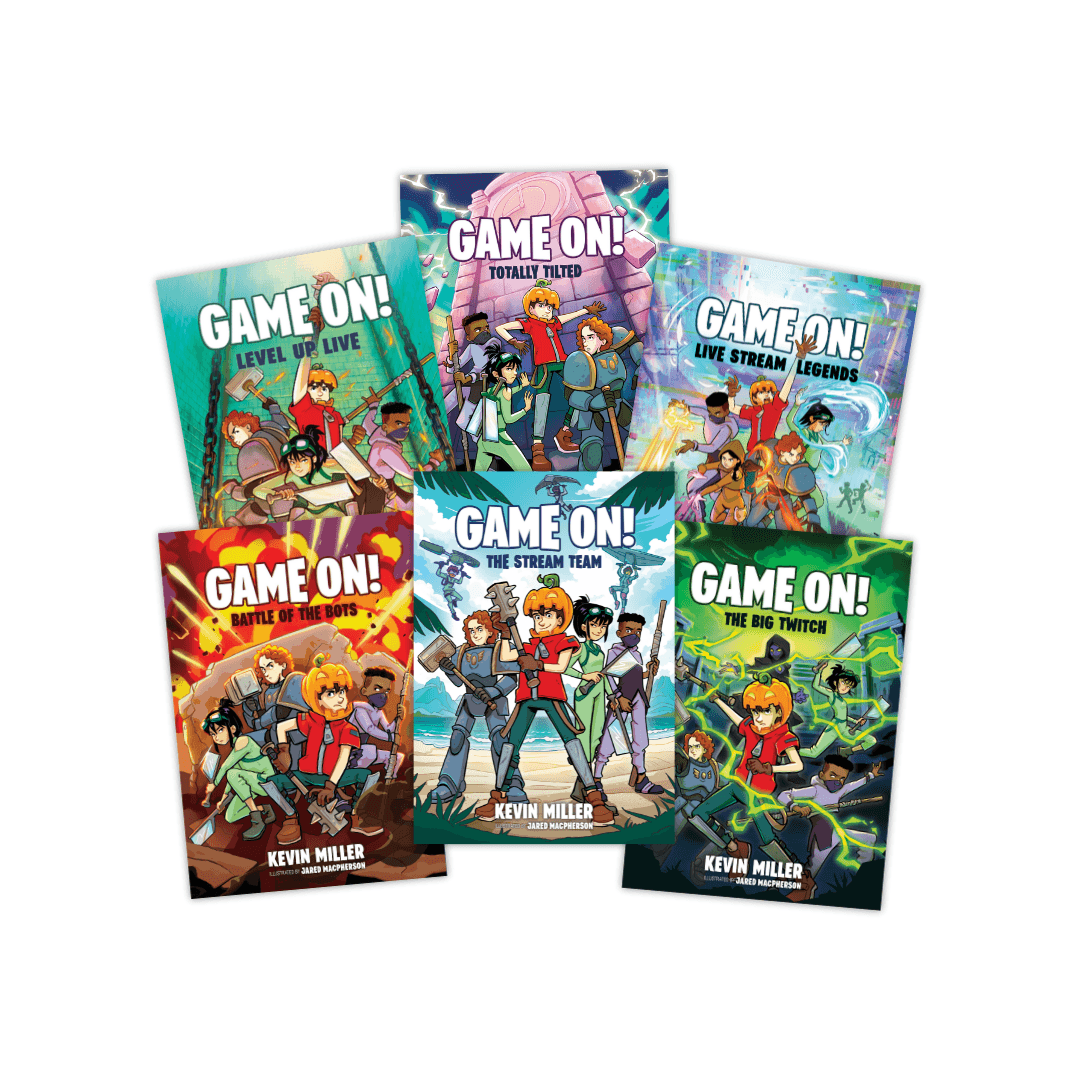
Start with the three-chapter preview of The Stream Team. The Game On! 6-pack follows Wyatt, who dreams of becoming a famous gamer and discovers he needs a team. The product page also shows illustrations from inside the books.
-
Good fit if: your child already knows gaming talk and likes humor.
-
Keep in mind: the sample has longer sentences and gaming slang, so the read-aloud test matters. Wyatt is 14 in the sample, so preview it before handing it to an 8- or 9-year-old.
Math and Mystery: The Math Inspectors, Books 1 to 6

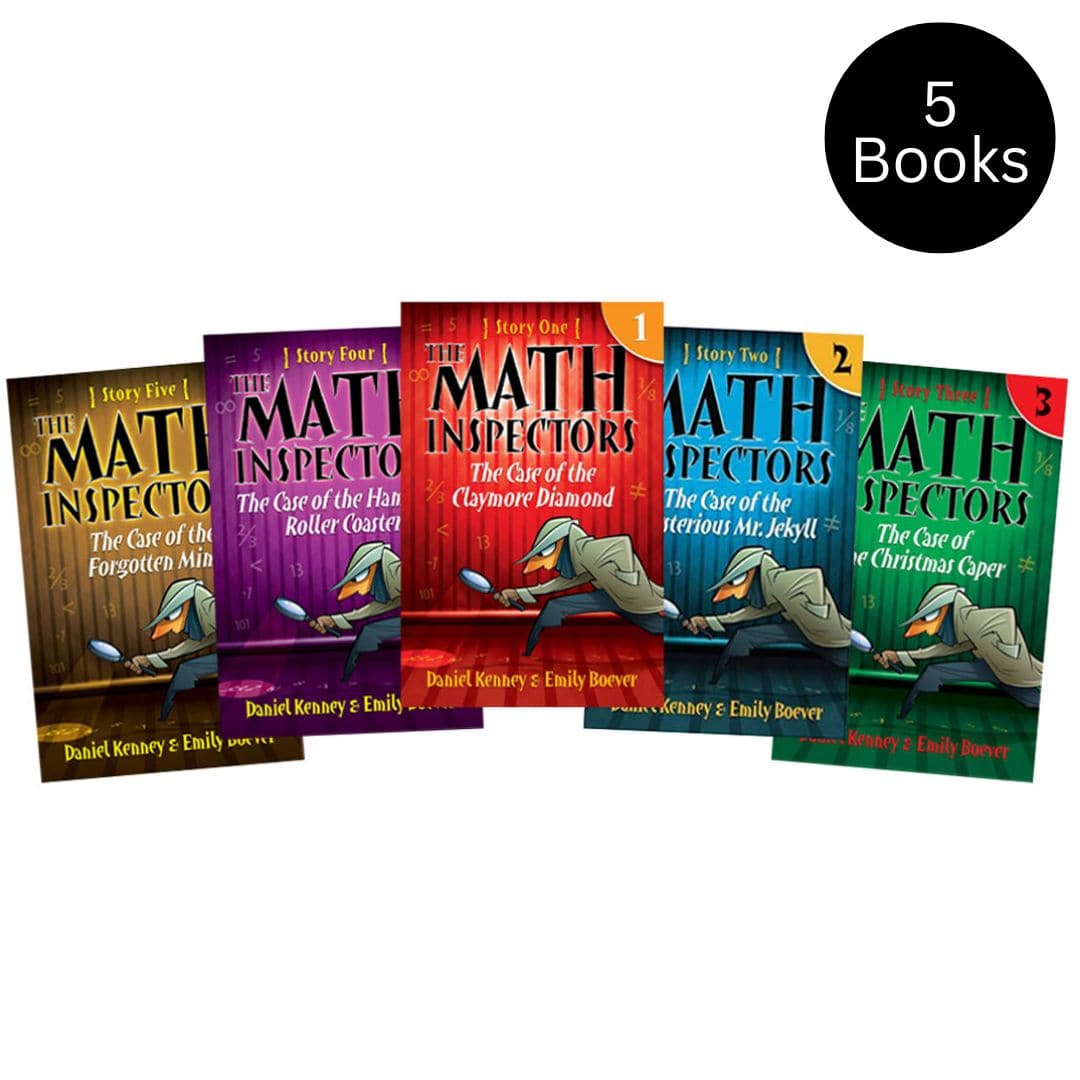
Start with the sample of The Case of the Claymore Diamond. In the Math Inspectors bundle, four 12-year-olds in a small New York town solve mysteries with math, and Book 1 ends with bonus math problems.
-
Good fit if: your child likes jokes, puzzles and detective stories, and is comfortable with longer chapters.
-
Keep in mind: after a 4-page opener, the Book 1 sample's chapters run 16 and 18 pages. The story also includes a robbery in which a shop owner is hurt, so preview it for younger readers.
When a different format fits better
If the page-aloud test showed that decoding words is the real struggle, another chapter book may not be the best next step, even a well-matched one.
When to Ask for Help
If your child struggles with words across many books, not just one, talk to their teacher. Most kids can become good readers if they get the right help, and parents play a key role in spotting when a child needs it.
A list of signs includes:
-
struggling to sound out most words
-
avoiding reading aloud
-
difficulty re-telling a story
-
difficulty following directions, rhyming, or hearing the separate sounds in words
The suggested steps:
1. Meet with your child's teacher. Bring examples of your child's work and ask what the teacher is seeing.
2. Ask what help the school offers, and meet with the principal or a reading specialist if needed.
3. If school interventions do not help, request an evaluation. A team that may include a school psychologist, a speech-language pathologist or a reading specialist does the testing.
Your child's pediatrician is also a good person to ask if you have other concerns. If attention is part of the picture, read Does Your Kid Have ADHD and Struggle with Reading?.

Reluctant Readers Don’t Need Pressure, They Need Better Books
If a child resists chapter books, it doesn’t mean they dislike reading; it often just means they haven’t found the right books yet.
By choosing chapter books with the right structure, spacing, and storytelling, reading can shift from frustrating to fulfilling. With thoughtful design and engaging series, reluctant readers can become confident readers, one chapter at a time.
At Bakken Books, we believe every child deserves books that meet them where they are and help them grow from there!
Find the Book That Gets Them Reading
You don't have to guess. Start with what your child already loves, and let a free sample do the testing for you. Answer three quick questions about what your child is into, and we'll match them with a series to try first.
Find Your Child's Series →
Every Bakken series is written and illustrated by real authors, built around a real kid interest, and backed by our 30-day money-back guarantee.
Frequently Asked Questions About Reluctant Readers
How can I tell if my child is a reluctant reader or a struggling reader?
Have your child read one page aloud from a book they picked, then ask what happened. If they read it smoothly and retell it but say it's boring, the problem is interest, so try a different topic or series. If they stall on many words, lose their place, or can't retell it, reading difficulty may be the barrier, and shared reading or a lower-pressure format is a better next step.
What chapter books are good for a reluctant 8-year-old?
Look for short chapters, a topic they already love, and a sample they can read without stalling. Among the series above, Space Bound has the shortest chapters (about 5 pages in the Book 1 sample) and the lowest Lexile range (480 to 540), and it's listed for ages 7 to 12. Preview Game On! first for younger kids, since the narrator is 14 and the book uses gaming slang.
How long should chapters be for a reluctant reader?
Short enough that a stopping point arrives before your child runs out of steam. For many reluctant readers, chapters of 4 to 6 pages feel manageable. If your child loves a book with longer chapters, read the first chapter together so the story keeps moving.
Do graphic novels and audiobooks count as reading?
Yes. Reading Rockets notes that graphic novels give struggling readers books they can succeed with, and audiobooks let kids enjoy a story while building listening skills. If decoding words is the main struggle, one of these can be a better first step than a harder chapter book.
Is it better to buy a single book or a whole series?
Try a sample first. Once your child likes it, a series means they already know the characters and setting when they start the next book, so there's less to figure out and no waiting between books.
Does Lexile level matter when choosing a book?
It's a helpful signal, but not the only one. A child who loves a topic may handle a harder book, and a tired child may struggle with an easier one. The page-aloud test tells you more than a number alone.
My child used to love reading. Why did they stop around age 9?
It's common. Enthusiasm for reading tends to dip around age 9. Reconnecting reading to your child's interests, and reading together again, can help bring back the fun.