Some kids can't walk past a riddle. They finish the word search on the kids' menu before the food arrives, try to crack the Wi-Fi password, and ask "but how did you know?" after every magic trick.
Those kids don't just want to read a mystery. They want to solve it first.
Here at Bakken Books, we've sold more than 2.7 million chapter books, including our own math- and science-powered mystery series. So we know how good it feels when a kid shouts the answer before the last chapter. Below are the best solve-along books for kids ages 6 to 12, each one packed with real clues, codes, or puzzles and highly rated. Sharpen those pencils, detectives.
Table of Contents
- 12 Books for Kids Who Love a Good Puzzle
- How to Find the Right Case for Your Young Detective
- Frequently Asked Questions About Puzzle Books for Kids
12 Books for Kids Who Love a Good Puzzle
Every pick on this list gives kids something to actually crack: hidden clues, math problems, codes, or riddles. We ordered them from first chapter books up to brain-busting middle-grade mysteries. Amazon ratings were checked November 10, 2026, and will change over time.
|
Book |
Ages |
What kids solve |
|
5–8 |
Simple clue-based cases |
|
|
6–8 |
Memory and detail puzzles |
|
|
6–9 |
Hidden clues and red herrings |
|
|
7–10 |
Short cases with answers in the back |
|
|
7–10 |
50+ silly math and logic puzzles |
|
|
8–10 |
Math-powered mysteries |
|
|
8–12 |
Logic puzzles and real coding |
|
|
8–12 |
Tiny details that crack big cases |
|
|
9–11 |
Riddles, rebuses, and library clues |
|
|
9–12 |
Codes hidden in the illustrations |
|
|
9–12 |
Brain-teaser tests and logic traps |
|
|
10+ |
A 16-player puzzle-mystery |
Starter Sleuth Books (Ages 5–9)
1. Nate the Great by Marjorie Weinman Sharmat

Nate the Great is a pancake-loving kid detective who takes his cases very seriously. With his dog Sludge by his side, he follows the clues one step at a time, which shows brand-new readers exactly how a detective thinks. With more than two dozen books in the series, there's always another case to crack.
Puzzle power: teaches kids to slow down and notice clues.
2. Cam Jansen: The Mystery of the Stolen Diamonds by David A. Adler
Cam has a photographic memory. She says "Click!" and remembers everything she sees, which comes in handy when a jewelry store gets robbed at the mall. Kids love testing their own memory against Cam's as they read.
Puzzle power: builds attention to detail and memory skills.
Shop for Cam Jansen: The Mystery of the Stolen Diamonds →
3. A to Z Mysteries: The Absent Author by Ron Roy

Best friends Dink, Josh, and Ruth Rose are thrilled when a famous mystery writer comes to their town, until he never shows up. The friends follow the clues to find him, and sharp readers can solve it before they do. There's one book for every letter of the alphabet, so the series runs 26 cases deep.
Puzzle power: spotting red herrings and hidden clues.
4. Encyclopedia Brown, Boy Detective by Donald J. Sobol

Ten-year-old Leroy "Encyclopedia" Brown runs his own detective agency and helps his police chief dad solve cases. Each short chapter is a mystery with every clue right on the page, and the answers are hidden in the back. It's the perfect solve-it-yourself book.
Puzzle power: true solve-along mysteries kids can crack on their own.
5. Sideways Arithmetic from Wayside School by Louis Sachar

At wacky Wayside School, Mrs. Jewls asks the class to add and subtract words. It sounds ridiculous, but it turns into more than 50 clever math and logic puzzles wrapped in silly stories. Fans of the original Wayside School books will love seeing the same strange classroom.
Puzzle power: stretches logic and number sense in a goofy way.
Shop for Sideways Arithmetic from Wayside School →
Master Detective Books (Ages 8–12)
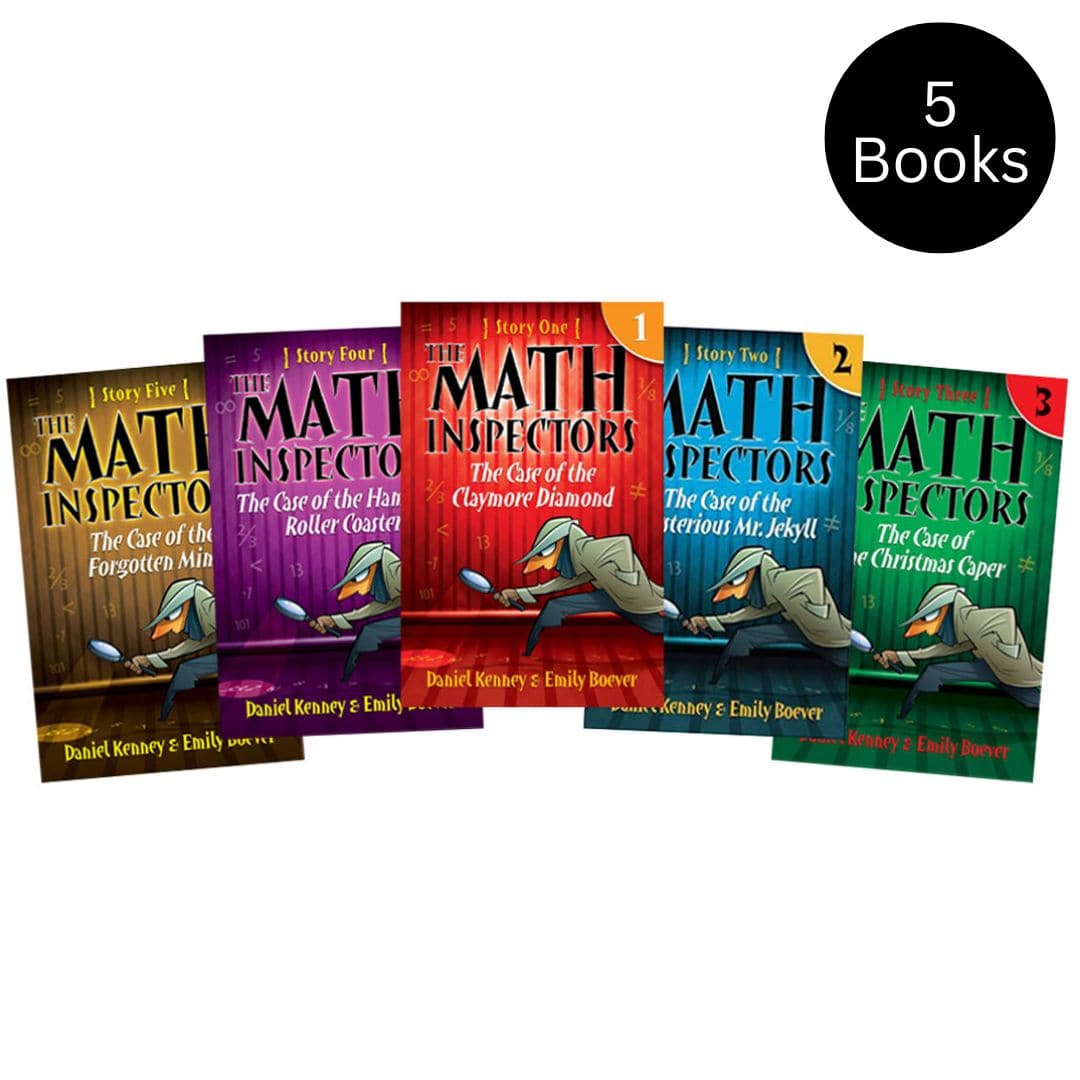
6. The Math Inspectors: The Case of the Claymore Diamond by Daniel Kenney and Emily Boever

Yes, this one's ours, and we're proud of it. Stanley, Charlotte, Gertie, and Felix are four twelve-year-olds in Ravensburg, New York, who love burgers, milkshakes, and math. They use real math to crack cases, and readers can work through the problems right alongside them.
Puzzle power: math word problems hidden inside a real mystery.
Shop for The Math Inspectors →
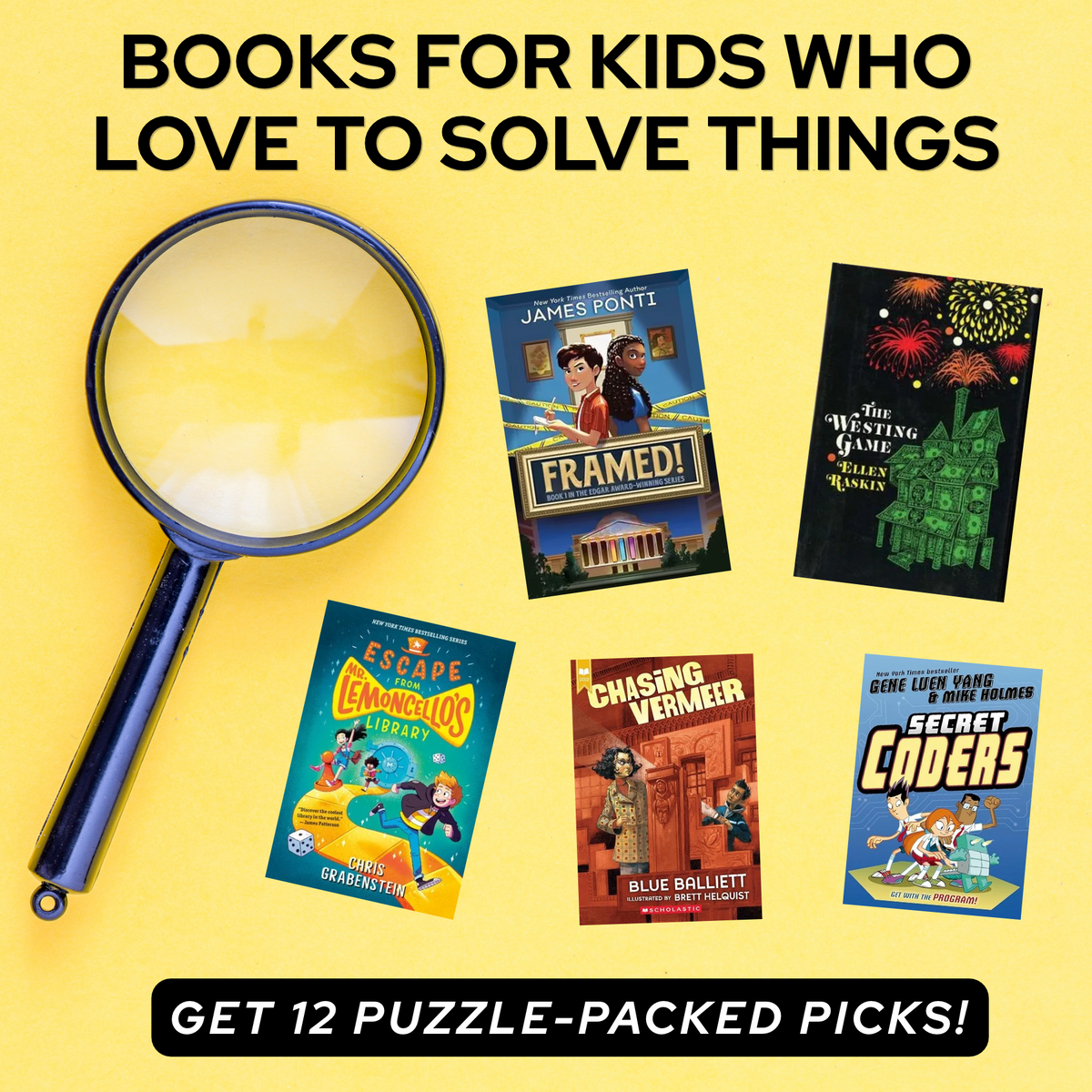
7. Secret Coders by Gene Luen Yang and Mike Holmes

Hopper and her friend Eni discover that their new school, Stately Academy, is full of secret puzzles left by its founder. To solve them, they have to learn to code. This graphic novel, written by a former computer science teacher, teaches real programming basics through logic puzzles kids can solve on the page.
Puzzle power: logic puzzles plus beginner coding skills.
8. Framed! by James Ponti

Twelve-year-old Florian Bates uses a method he calls TOAST, the Theory of All Small Things, to notice tiny details everyone else misses. When he and his friend Margaret spot clues about stolen paintings at the National Gallery of Art, the FBI wants his help. Kids finish this one trying TOAST on everyone they meet.
Puzzle power: teaches kids to read people and places like a real detective.
9. Escape from Mr. Lemoncello's Library by Chris Grabenstein

Kyle Keeley loves games, so he's thrilled to win a spot at an overnight lock-in at the new library built by famous game maker Luigi Lemoncello. The catch? The kids have to solve riddles, rebuses, and clues hidden throughout the library to find the way out. Readers often compare it to Charlie and the Chocolate Factory, but for puzzle lovers.
Puzzle power: riddles and word puzzles kids can try to solve first.
Shop for Escape from Mr. Lemoncello's Library →
10. Chasing Vermeer by Blue Balliett

When a famous painting vanishes on its way to Chicago, classmates Petra and Calder use patterns, pentominoes, and coincidences to track it down. Here's the twist: Brett Helquist's illustrations hide a secret code of their own. This Edgar Award winner is a puzzle inside a puzzle.
Puzzle power: pattern-spotting and a hidden code in the pictures.
11. The Mysterious Benedict Society by Trenton Lee Stewart

It starts with a newspaper ad asking, "Are you a gifted child looking for special opportunities?" Four kids pass a series of tricky tests and are sent undercover on a secret mission. The book is packed with brain teasers, and there's even a companion book of Mr. Benedict's puzzles for kids who want more.
Puzzle power: brain teasers, logic traps, and teamwork.
Shop for The Mysterious Benedict Society →
12. The Westing Game by Ellen Raskin

When millionaire Samuel Westing dies, sixteen heirs are paired up and given strange clues. Whoever solves the puzzle of his death wins his fortune. This 1979 Newbery Medal winner is full of twists, and readers have every clue they need to solve it if they pay close attention.
Puzzle power: the ultimate whodunit for advanced readers.
How to Find the Right Case for Your Young Detective
The best puzzle book matches the kind of problem your kid loves to solve.
Here's how we'd match them:
-
Number crunchers: start with The Math Inspectors or Sideways Arithmetic from Wayside School.
-
Code breakers and techy kids: try Secret Coders or Chasing Vermeer.
-
Riddle and game lovers: hand them Escape from Mr. Lemoncello's Library or The Mysterious Benedict Society.
-
Classic whodunit fans: go with Encyclopedia Brown, Framed!, or The Westing Game.
Calling All Puzzle Solvers: Meet Bakken Books
At Bakken Books, we write chapter book series for ages 8 to 12 that are built around what kids already love. Every series has short chapters, cliffhangers, and wholesome stories parents can trust.
Not sure where to start? Find your child's perfect books with our FREE quiz!
Frequently Asked Questions About Puzzle Books for Kids
What are the best books for kids who like puzzles?
Escape from Mr. Lemoncello's Library, The Mysterious Benedict Society, and The Westing Game are favorites for ages 9 to 12. For younger kids, Encyclopedia Brown and Nate the Great let them solve short cases on their own.
What is a solve-along mystery book?
It's a mystery that gives readers every clue they need to solve the case before the characters do. Encyclopedia Brown is the classic example, with each answer printed in the back of the book.
Are there chapter books that teach math through mysteries?
Yes, The Math Inspectors series weaves real math problems into each case, and Sideways Arithmetic from Wayside School packs more than 50 silly math and logic puzzles into a story. Both make math feel like a game instead of homework.
Are puzzle books good for reluctant readers?
Yes, puzzles give kids a goal while they read. Instead of just getting through the chapter, they're racing to solve the case. Short, case-based books like Encyclopedia Brown and The Math Inspectors work especially well.
Do mystery books help kids think critically?
They do! Mysteries ask kids to gather evidence, make predictions, and change their minds when new clues show up. Those are the same skills teachers look for in reading comprehension.
What age is The Westing Game for?
Most kids are ready around age 10 or 11. It has 16 characters and lots of twists, so it's best for confident readers or as a family read-aloud.