- Quick Picks: Mystery Chapter Books Compared
- How to Choose: Lighter, Puzzle, or Bigger Stakes?
- Mystery Series From Bakken Books
- Classic and Newer Mysteries from Other Publishers
- How We Chose These Books
- Find Your Reader's Next Case
- Frequently Asked Questions About Mystery Chapter Books for Kids 8-12
- More Reading Guides
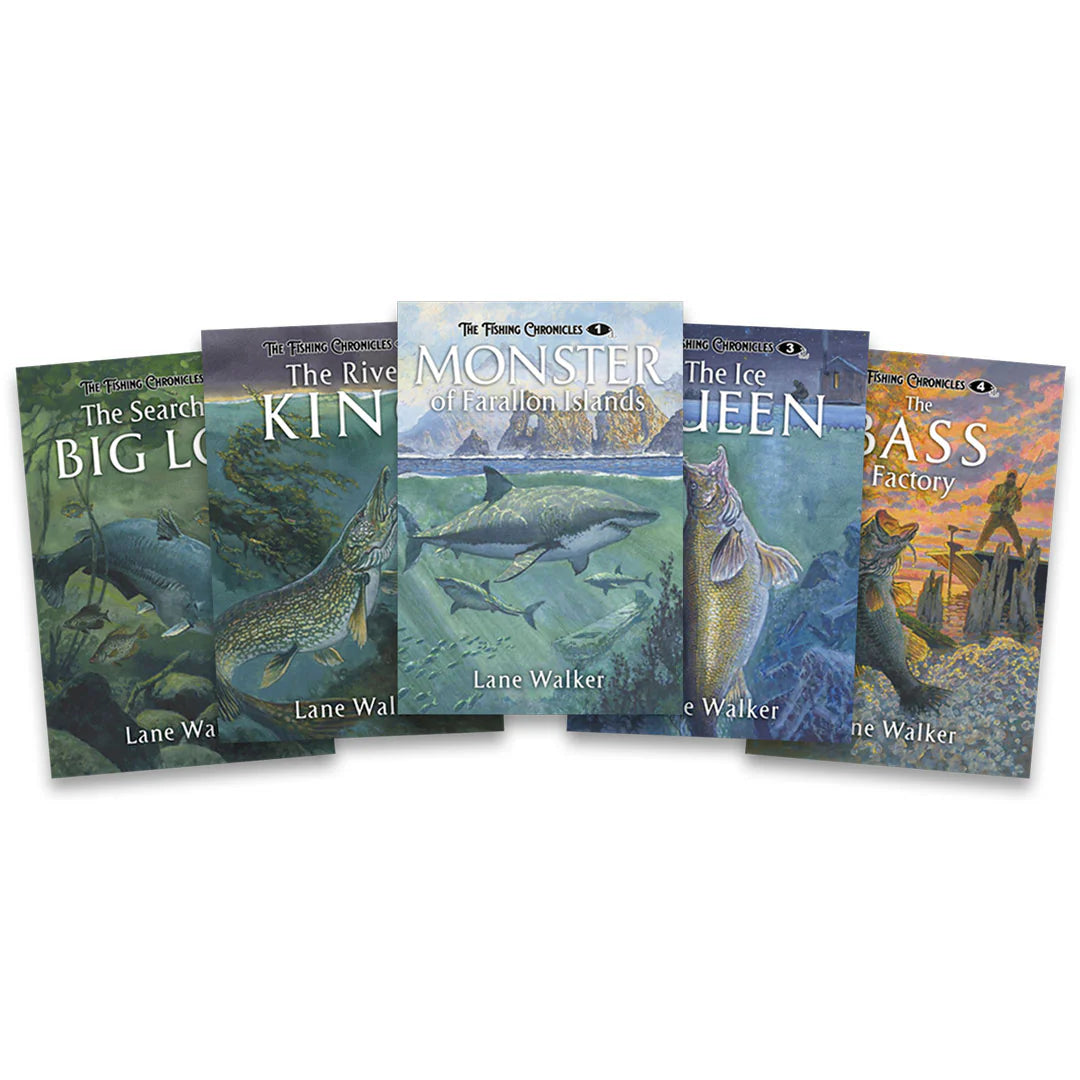
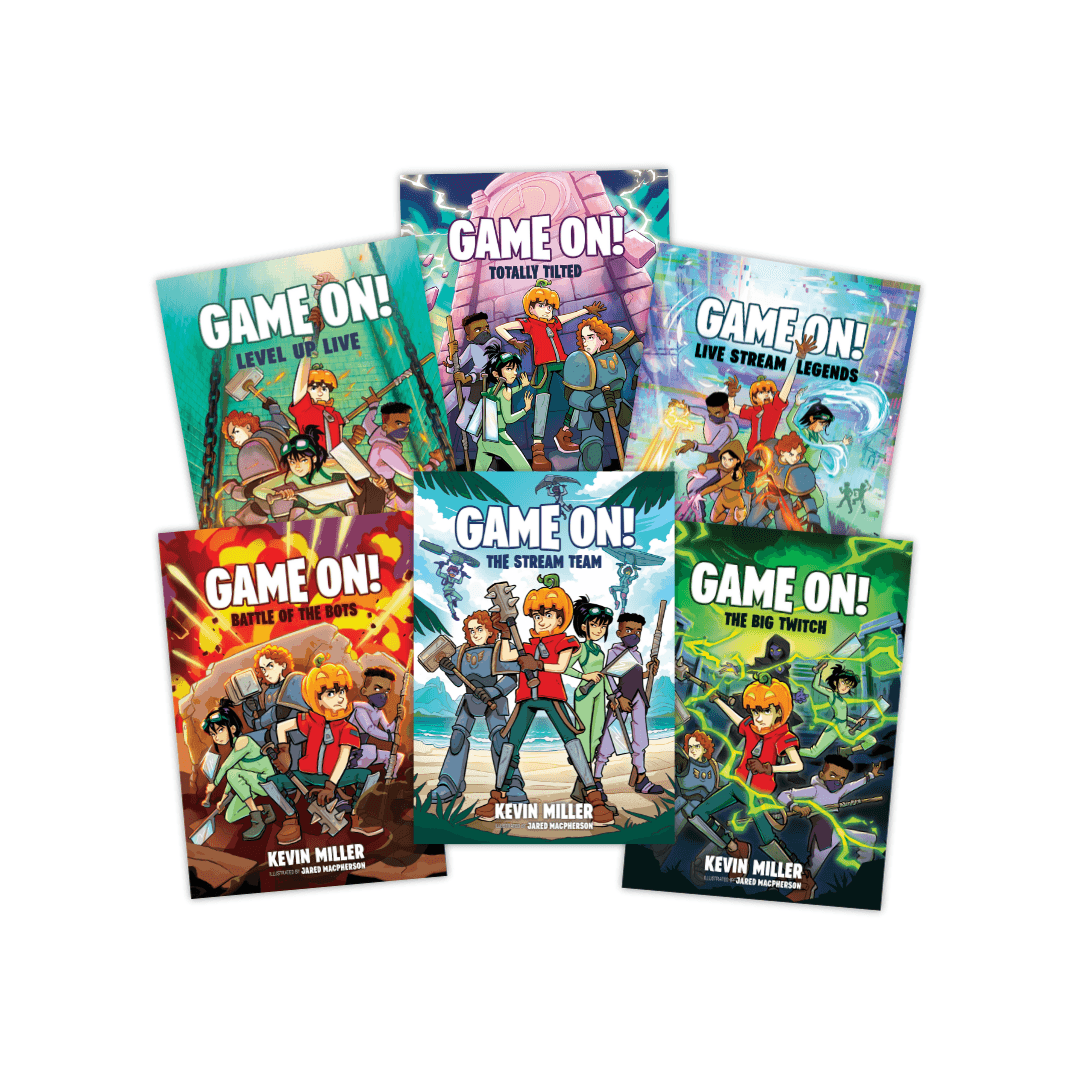
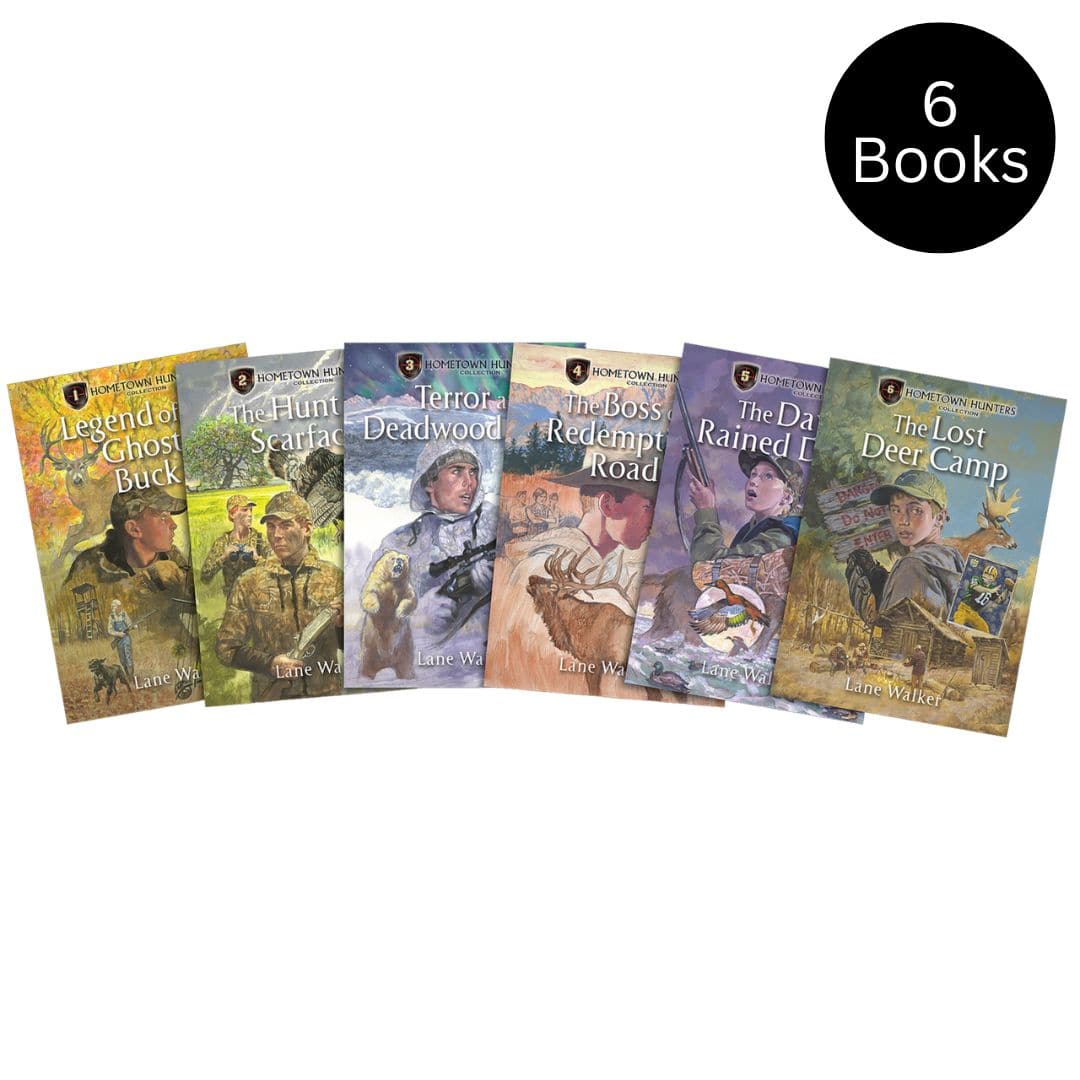
The right mystery depends less on your child's age and more on what kind of case they want to crack. Newer chapter-book readers usually do best with short, illustrated cases like A to Z Mysteries or Encyclopedia Brown. Kids who love numbers or experiments can solve along with The Math Inspectors or The Science Inspectors. Outdoor kids tend to click with The Campground Kids, and confident readers ready for bigger stakes can try The Mystery Searchers, City Spies, or The Mysterious Benedict Society.
Five of the series below are sold by Bakken Books, and each one is labeled. The rest come from other publishers because they're great fits too. Not sure where your reader lands? Open a free sample and read the first chapter together.
Quick Picks: Mystery Chapter Books Compared
|
Book or series |
Type |
Best fit for |
Ages |
Format |
Where to start |
|
The Math Inspectors, Daniel Kenney & Emily Boever
|
Puzzle |
Kids who like numbers, humor, and a team of friends |
8–12 |
Chapter book, about 170 pp avg. |
Books 1–6 bundle |
|
A to Z Mysteries, Ron Roy
|
Lighter |
Kids just moving into chapter books |
6–9 |
Illustrated chapter book, 96 pp |
The Absent Author |
|
Outdoor adventure |
Kids who love camping, wildlife, and real-world outdoor adventures |
8–12 |
Chapter book, about 170 pp avg. |
For National Park Adventures, start wherever. For Great Lakes and Lost City, start at book 1. |
|
|
The Boxcar Children, Gertrude Chandler Warner
|
Lighter |
Younger readers who love family adventure |
7–10 |
Illustrated chapter book, about 160 pp |
The Boxcar Children (Book 1) |
|
Clubhouse Mysteries, Sharon M. Draper
|
Lighter |
Kids who like friend-group, neighborhood cases |
8–12 |
Short illustrated chapter book, about 112 pp |
The Buried Bones Mystery |
|
Encyclopedia Brown, Donald J. Sobol
|
Puzzle |
Kids who want to solve each case before the answer |
7–11 |
Collection of short cases, about 90 pp |
Encyclopedia Brown, Boy Detective |
|
The Science Inspectors, Daniel Kenney
|
Puzzle |
Kids who ask "why" and love experiments |
9–12 |
Chapter book, about 165 pp avg. |
Books 1–3 bundle |
|
The History Mystery Kids, Daniel Kenney
|
Adventure |
Kids who like time travel and American history |
9–12 |
Illustrated chapter book, about 140 pp avg. |
Books 1–5 bundle |
|
Nancy Drew, Carolyn Keene
|
Classic |
Readers ready for a longer classic whodunit |
8–12 |
Chapter book, 192 pp |
The Secret of the Old Clock |
|
The Hardy Boys, Franklin W. Dixon
|
Classic |
Readers ready for a longer classic whodunit |
8–12 |
Chapter book, 192 pp |
The Tower Treasure |
|
Winterhouse, Ben Guterson
|
Puzzle |
Word-puzzle lovers who don't mind some magic |
9–12 |
Illustrated novel, 384 pp |
Winterhouse (Book 1) |
|
The Mysterious Benedict Society, Trenton Lee Stewart
|
Puzzle |
Strong readers who love riddles and long books |
8–12 |
Novel, 512 pp |
The Mysterious Benedict Society (Book 1) |
|
The Mystery Searchers, Barry Forbes
|
Bigger stakes |
Older readers who want teen detectives and tech |
9–14 |
Chapter book, about 145 pp avg. |
Books 1–10 bundle |
|
City Spies, James Ponti
|
Bigger stakes |
Action fans who want spies and global missions |
8–12 |
Novel, 400 pp |
City Spies (Book 1) |
|
The Parker Inheritance, Varian Johnson
|
Bigger stakes |
Puzzle lovers ready for weighty history |
8–12 |
Novel, about 352 pp |
Standalone |
|
Aggie Morton, Mystery Queen, Marthe Jocelyn
|
Bigger stakes |
Older readers who want a classic murder mystery |
10 and up |
Illustrated novel, about 336 pp |
The Body Under the Piano |
How to Choose: Lighter, Puzzle, or Bigger Stakes?
Start with what your child already loves, then match the reading load to where they are right now.
Most mysteries for this age fall into one of three groups:
1. Lighter mysteries
Short books, friendly stakes, and pictures every few pages. These are a great first step for kids new to chapter books, or for any reader who wants a quick win. Try A to Z Mysteries, The Boxcar Children, or Clubhouse Mysteries. "Lighter" doesn't always mean zero spooky moments: Clubhouse Mysteries Book 1 opens with a box of buried bones.
2. Puzzle-based mysteries
These hand the reader the clues and invite them to solve the case first. Encyclopedia Brown keeps the answers at the back of the book. The Math Inspectors ends Book 1 with bonus math problems, and The Science Inspectors builds its cases on the scientific method. They suit kids who love to argue about "who did it." The longest puzzle books on this list, The Mysterious Benedict Society (512 pages) and Winterhouse (384 pages), work best for readers with stamina.
3. Longer or more intense adventures
More pages, older heroes, and real danger. These fit confident readers who want higher stakes:
-
The Mystery Searchers stars 16-year-old twins. Book 1 opens with a near-miss on a highway and a stranger who mimes shooting at them.
-
City Spies follows kids trained by British intelligence. The publisher lists breaking and entering and explosives among their skills.
-
The Parker Inheritance uncovers a violent racist attack from 1957.
-
Aggie Morton begins with a murder, and the publisher recommends it for ages 10 and up.
Age and reading ability aren't the same thing
An age range describes who the story is written for, not how hard the words are. A strong 8-year-old reader might handle the vocabulary in Aggie Morton but not be ready for a murder plot.
Ask two separate questions: is the story right for my child, and can they read it comfortably?
Try the interior-page test
The quickest way to answer both questions is to look inside. Open a sample, have your child read a page aloud, and notice…
-
whether they can follow the story with only a few unfamiliar words,
-
whether a chapter is short enough to finish in one sitting,
-
how much the pictures help, and
-
whether they want to turn the page
Every Bakken series below has a free sample for reference.
Mystery Series From Bakken Books
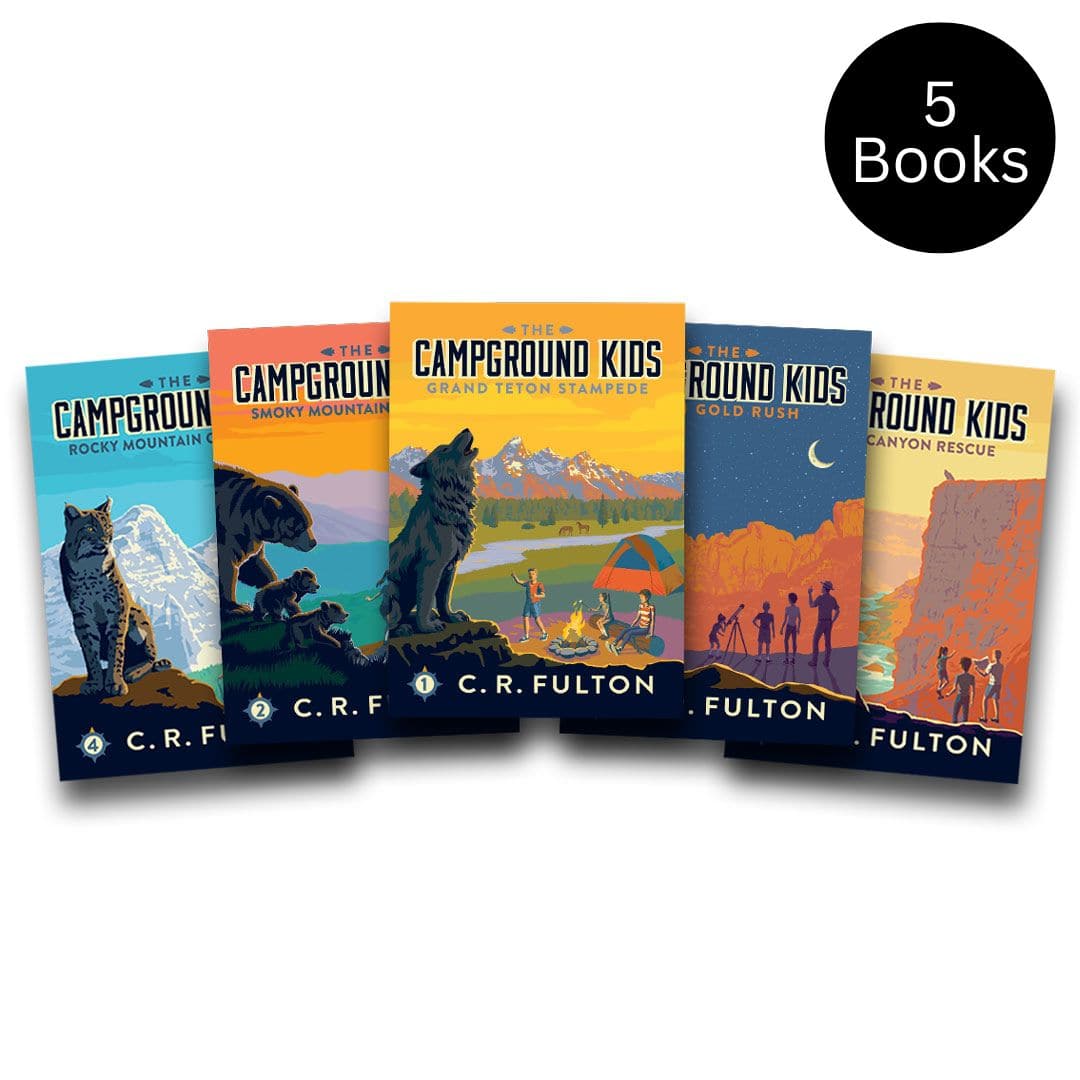
The Campground Kids by C.R. Fulton

Type of mystery: outdoor adventure with a mystery mixed in.
The Campground Kids is three series in one: National Park Adventures, Great Lakes Adventures, and Lost City Adventures. All three follow twelve-year-old Isaiah, his nine-year-old sister Sadie, and their fourteen-year-old cousin Ethan, but each series takes them somewhere new:
-
National Park Adventures: the kids camp their way through America's national parks, and each book is its own adventure.
-
Great Lakes Adventures (5 books): a hidden note inside Poppa's old pocketknife sends the kids and Poppa aboard the Giddy Galleon on a treasure hunt across all five Great Lakes. Along the way they explore shipwrecks, decode clues, ride out dangerous weather, and stay ahead of a rival treasure hunter.
-
Lost City Adventures (6 books): when Uncle Elliott goes missing, the kids find a coded trail he left behind. With an old artifact called the Navigem, they follow clues through real archaeological sites in Belize, Mexico, Guatemala, and Peru, and soon suspect they aren't the only ones searching.
Great for: kids who'd rather be outside, animal lovers, and families planning a park trip.
Might not be the best first pick if: your child wants a tight whodunit from page one. The mystery builds alongside the camping trip.
Reading details: ages 8–12, grades 3–7 for all three series. Books average about 170 pages (National Park), 144 pages (Great Lakes), and 160 pages (Lost City). The National Park Adventures books have a listed Lexile range of 630L–720L; the newer series are still being measured.
Where to start:
-
National Park Adventures: start with whichever park your child loves most. Read the first two chapters of Grand Teton Stampede, then shop Books 1–5 or 6-10 on our collection page.
-
Great Lakes Adventures: read in order, starting with Lake Superior Secret. Read inside Book 1, then shop the Great Lakes Adventures set.
-
Lost City Adventures: read in order, starting with The Mark of the Sun Temple. Read inside Book 1, then pre-order the Lost City Adventures set (expected to ship October 30).
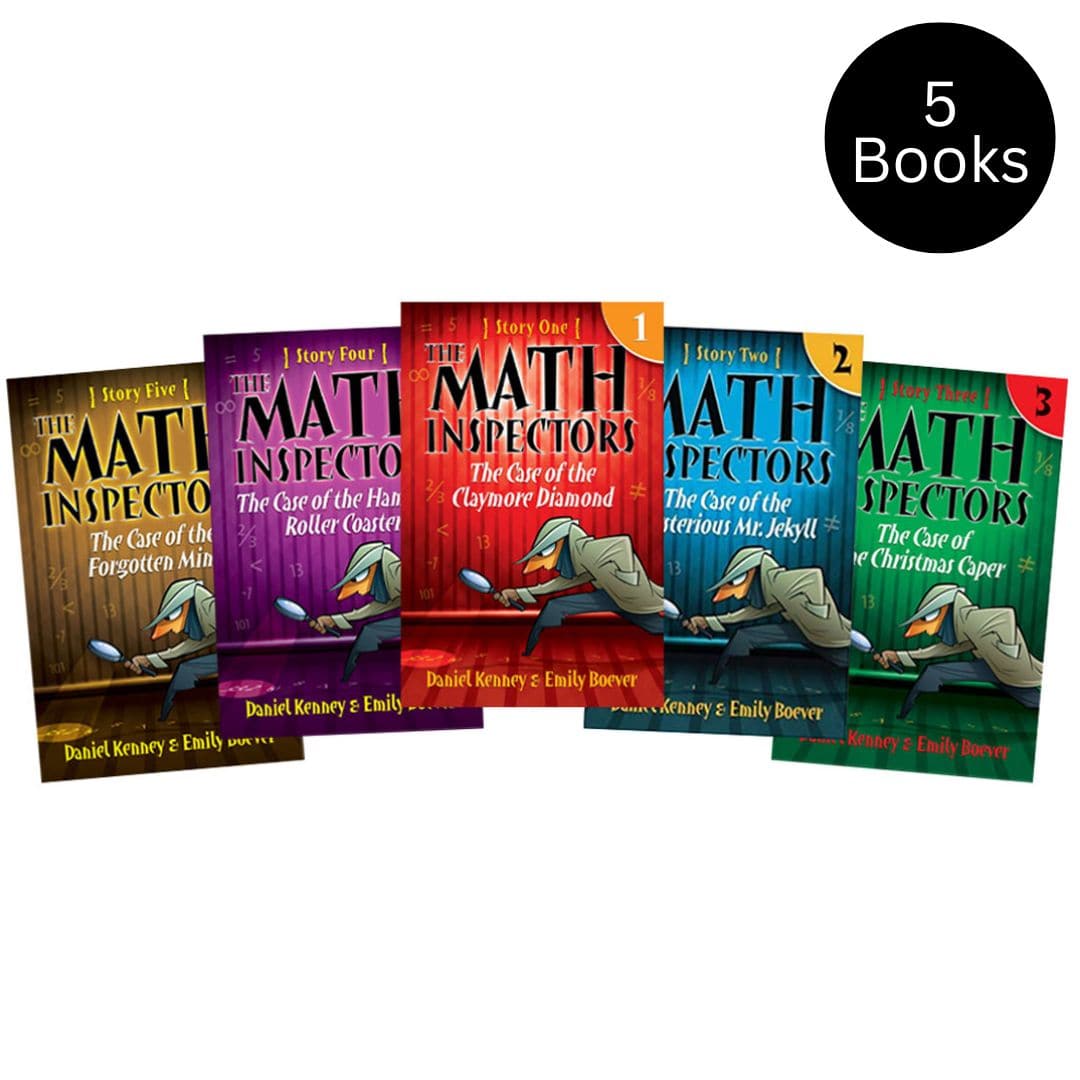
The Math Inspectors by Daniel Kenney and Emily Boever

Type of mystery: puzzle-based, with math as the detective's tool.
Stanley, Charlotte, Gertie, and Felix are twelve-year-old friends in Ravensburg, New York, who love burgers, milkshakes, and math. In Book 1, The Case of the Claymore Diamond, an old police scanner in their tree house picks up an armed robbery at the local jewelry store. Police arrest a suspect fast, but the diamond is missing, and Stanley has a feeling the police missed something.
Great for: kids who enjoy numbers, logic, and goofy friend-group banter.
Might not be the best first pick if: your child actively dislikes math. The early chapters are mostly story, but the math matters to how the case gets solved.
Reading details: ages 8–12, grades 4–7, about 170 pages per book, listed Lexile range 620L–650L.
Where to start: Book 1. Read the sample pages, then shop The Math Inspectors Books.
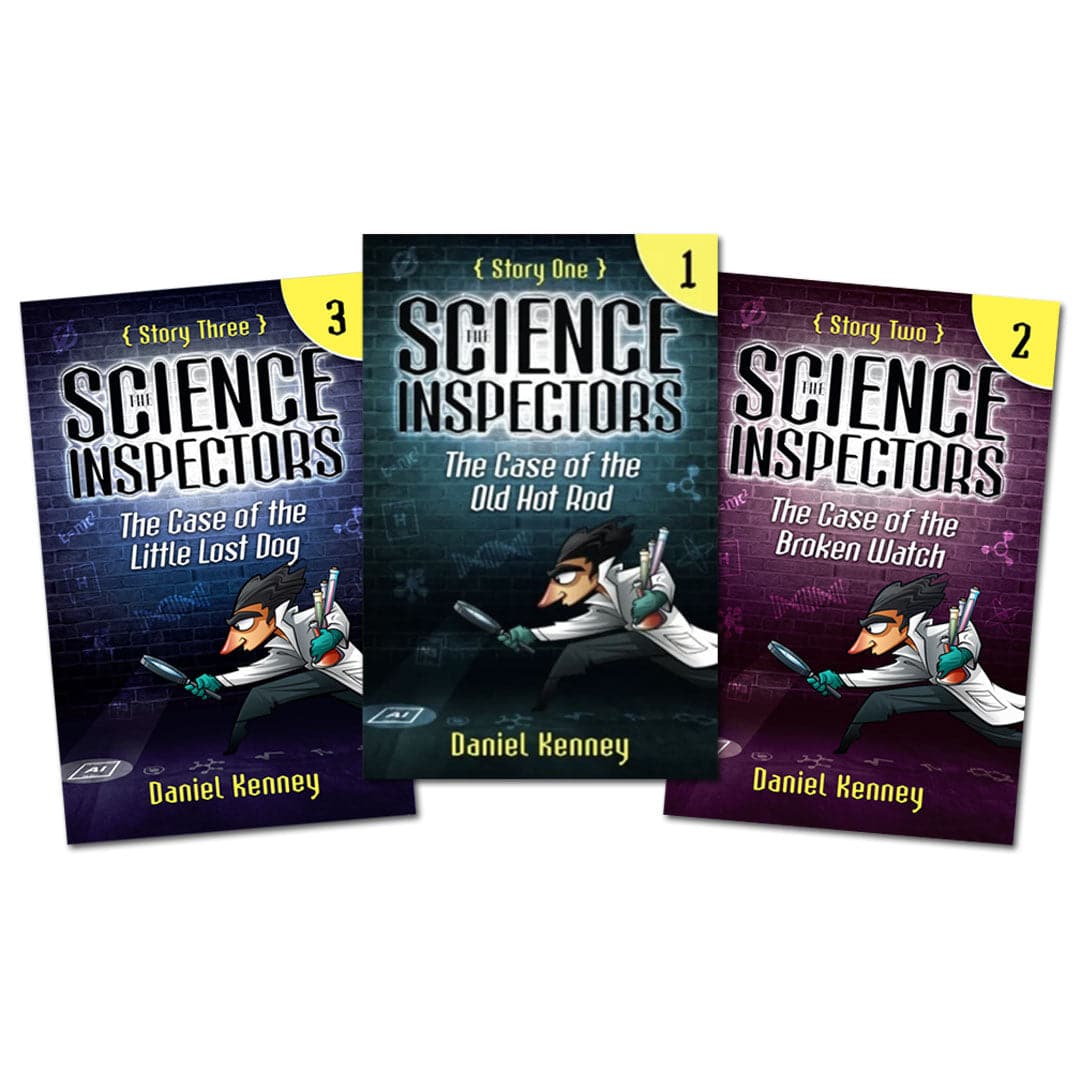
The Science Inspectors by Daniel Kenney

Type of mystery: puzzle-based, solved with the scientific method.
Thirteen-year-old Angela Moretti has just moved from Wisconsin to her family's Italian restaurant in Chicago. On her first day at a huge new middle school, a toilet-paper bomb from a rival school goes off under her feet. With new friends Howie and Norah, she sets out to find who did it, using science. Book 1 is The Case of the Old Hot Rod.
Although the series sound similar, The Science Inspectors books differ from The Math Inspectors books. The heroes are a year older, the setting is a big-city middle school, and there's more social drama. Expect a mean-girl rival and a hero with "a bit of a temper."
Great for: kids who ask "why" about everything and like science class.
Might not be the best first pick if: your reader is on the younger end and not yet interested in middle-school social dynamics.
Reading details: ages 9–12, grades 4–8, about 165 pages per book, listed Lexile range 610L–670L.
Where to start: Book 1. Read the first two chapters, then shop The Science Inspectors Books 1–3.
The History Mystery Kids by Daniel Kenney

Type of mystery: time-travel adventure with a rescue mystery at its center.
At a museum opening, Professor Abner Jefferson opens an old book he believes belonged to Paul Revere. The floor shakes, a light flashes, and he vanishes. His daughter April, her eight-year-old brother Toad, and her best friend Henry follow him through the book. In Book 1, Fiasco in Florida, they land in a stone fort under British cannon fire. Each book visits a different state and time period.
Great for: kids who like history but don't want it to feel like homework, and readers who need a story that grabs them right away.
Might not be the best first pick if: your child wants a fair-play clue puzzle. This series is more adventure and rescue than whodunit.
Reading details: ages 9–12, grades 4–7, about 140 pages per book, listed Lexile range 580L–610L.
Where to start: Book 1. Read the first three chapters of Fiasco in Florida, then shop The History Mystery Kids Books 1–5.
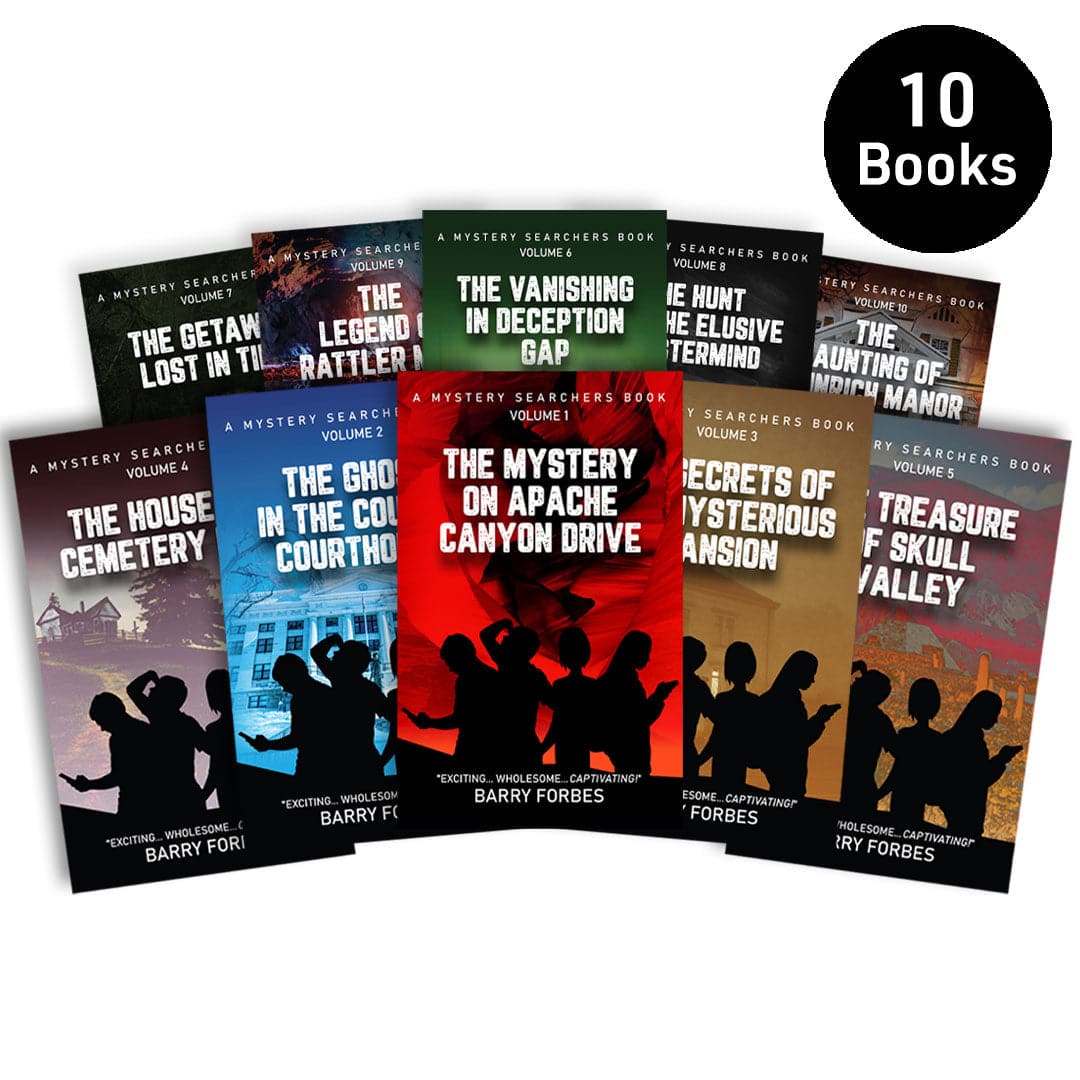
The Mystery Searchers by Barry Forbes

Type of mystery: higher-stakes detective series with teen heroes and modern tech.
Sixteen-year-old twins Suzanne and Tom Jackson, whose dad is the police chief in Prescott, Arizona, team up with friends Pete and Kathy Brunelli. They use drones, GPS trackers, and other gadgets to crack cases. In Book 1, The Mystery on Apache Canyon Drive, they rescue a frightened little girl from the middle of a highway. No one knows who she is.
Great for: confident readers at the older end of this range, and fans of Nancy Drew, or the Hardy Boys who want a modern version.
Might not be the best first pick if: your child is on the younger end or sensitive to suspense. Read Chapter 1 together first.
Reading details: ages 9–14, grades 4–8, about 145 pages per book, listed Lexile range 630L–690L.
Where to start: Book 1. Read the sample chapters, then check out the full Mystery Searchers collection.
Classic and Newer Mysteries from Other Publishers
We don't sell these, but they belong on any mystery list for this age.
Classics that still work
The Boxcar Children by Gertrude Chandler Warner

Four orphaned siblings make a home in an abandoned boxcar, then discover a grandfather they'd been afraid of. Book 1 is more a family survival story than a mystery; the mystery-solving grows in later books. It's a gentle fit for younger readers. Ages 7–10. Start with The Boxcar Children.
Encyclopedia Brown by Donald J. Sobol

Ten-year-old Leroy “Encyclopedia” Brown, son of the town's police chief, solves ten short cases per book. The answers sit at the back, so kids can try to crack each case first. Short cases make it a strong pick for reluctant readers. Ages 7–11.
Nancy Drew by Carolyn Keene

The original teen sleuth. In Book 1, Nancy Drew hunts for a missing will before the wrong relatives inherit everything. These books are longer than the lighter picks above, and some details feel dated. Ages 8–12.
The Hardy Boys by Franklin W. Dixon

Brothers Frank and Joe Hardy chase down stolen loot hidden "in the tower" to clear a friend's father. Like Nancy Drew, The Hardy Boys suits kids ready for a longer, more traditional whodunit. Ages 8–12.
Newer favorites
A to Z Mysteries by Ron Roy

Dink, Josh, and Ruth Rose solve a case in each book, one for every letter of the alphabet. In Book 1, Dink's favorite author never shows up for a book signing. At 96 pages with illustrations, it's the gentlest step into mysteries on this list. Ages 6–9.
Clubhouse Mysteries by Sharon M. Draper

Ziggy and his friends Rico, Rashawn, and Jerome build a backyard clubhouse and dig up a box of bones. Later books explore an old Underground Railroad tunnel and a spooky camping trip. Short books with a strong friend group make it a good bridge to longer mysteries. Ages 8–12.
The Mysterious Benedict Society by Trenton Lee Stewart

In The Mysterious Benedict Society, gifted kids answer a strange newspaper ad, pass a series of tests (which readers take too), and go undercover at a secretive school. It's packed with logic puzzles and riddles. At 512 pages, Book 1 is the longest pick on this list.
Winterhouse by Ben Guterson

Eleven-year-old Elizabeth is sent alone to a grand hotel over Christmas, where a huge library, word puzzles, and a family secret wait. The Winterhouse story includes magic and some spooky moments. It was an Edgar Award and Agatha Award finalist. Ages 9–12.
The Parker Inheritance by Varian Johnson

In The Parker Inheritance, twelve-year-old Candice finds a letter in her late grandmother's house that points to a hidden fortune and a town's buried past. With her neighbor Brandon, she uncovers a racist attack from the Jim Crow era. It's a clever puzzle with heavy themes, so it's worth reading together or discussing. Ages 8–12. Standalone.
City Spies by James Ponti

Sara, a hacker in the New York City foster care system, is recruited by British intelligence to join a team of kid spies based in Scotland. In City Spies, expect global missions, gadgets, and fast action for ages 8–12.
Aggie Morton, Mystery Queen by Marthe Jocelyn

Set in 1902 England and inspired by a young Agatha Christie, Aggie Morton, Mystery Queen follows twelve-year-old Aggie and her friend Hector as they investigate a death in a dance studio. It's a true murder mystery with red herrings and deduction. Ages 10 and up.
How We Chose These Books
We picked books that give parents real options across reading types, not a ranking. Every title had to be a true mystery or mystery-driven adventure written for kids in roughly the 8–12 range.
We then weighed:
-
Interest: what kind of case it is (outdoor, math, science, history, spy, classic whodunit) so kids can start from what they already love.
-
Format: illustrated chapter book or longer novel, and how long Book 1 runs.
-
Reading demands: recommended ages, page counts, and, where we could see it, chapter length and how quickly the story starts.
-
Story content: scary moments, violence, or heavy themes a parent may want to know about.
-
Fit: whether the book works as a first mystery, a step up, or a challenge for a confident reader.
Find Your Reader's Next Case
Ready for more clues, codes, and campfire cliffhangers? Browse every mystery series we carry, from outdoor adventures to math and science cases, all in one place.
Shop all mystery chapter books >>>
Frequently Asked Questions About Mystery Chapter Books for Kids 8-12
What's a good mystery for a reluctant reader?
Look for short cases and a fast start. Encyclopedia Brown packs ten quick cases into one small book, A to Z Mysteries runs 96 pages with pictures, and The History Mystery Kids hooks readers in the first chapter. A sample is the best test: if your child asks what happens next, you've found a fit.
Are any of these graphic novels?
No. Everything on this list is a traditional or illustrated chapter book. If your child prefers comics-style storytelling, our guide to graphic novels vs. chapter books can help you decide what to try next.
My child finished a series. What next?
Several Bakken series continue past the first bundle! You can also browse every title in our mystery chapter books collection.
Which mysteries are best for kids who love history?
The History Mystery Kids drops readers into real moments in American history through time travel. The Campground Kids Lost City Adventures visit real archaeological sites in Central and South America.
Do these series need to be read in order?
It depends on the series. The Campground Kids National Park Adventures books can be read in any order, but the Great Lakes and Lost City Adventures books should be read in order. For our other four series, start with Book 1: it introduces the friend group, and in The History Mystery Kids, Book 1 is where the dad disappears. A to Z Mysteries and Encyclopedia Brown are easier to read out of order, since each case wraps up on its own.