Table of Contents
Watching your child lose confidence in math can be heartbreaking. Maybe they shut down when it's time for homework, become frustrated over simple problems, or insist they're "just bad at math." If that sounds familiar, you're far from alone.
Many children experience math anxiety at some point during their school years. In fact, math anxiety can affect kids who are struggling with math as well as those who normally perform well in school. The pressure to get the right answer, fear of making mistakes, and lack of confidence can quickly turn math into a source of stress.
But with the right support, encouragement, and resources, kids can build confidence, improve their skills, and even learn to truly enjoy math.
In this guide, we'll cover practical strategies for overcoming math anxiety, helping a kid struggling with math, and turning math into something your kiddo approaches with confidence instead of fear.
What Is Math Anxiety?
Math anxiety entails more than simply disliking math.
It's often a feeling of nervousness, fear, or stress that occurs when a child is faced with math-related tasks. Some kids may become anxious during tests, while others may struggle when solving homework problems or participating in class.
Common signs of math anxiety include:
-
Avoiding math homework
-
Becoming frustrated quickly during math assignments
-
Saying they are "bad at math"
-
Freezing up during tests
-
Complaining of headaches or stomachaches before math class
-
Becoming emotional when discussing math
The challenging part is that anxiety can make math performance worse. When kids feel stressed, it becomes harder for their brains to focus, solve problems, and remember concepts they've already learned. This can create a cycle where poor performance increases anxiety, and increased anxiety leads to more struggles.
Understanding this cycle is the first step toward breaking it.
Why Some Kids Struggle with Math
Parents often wonder why their child struggles with math when they seem capable in other subjects.
A number of factors can contribute to math difficulties:
Fear of Making Mistakes
Many kids believe there is only one correct answer in math. Because of this, they may become afraid to try if they aren't completely sure they'll succeed.
Gaps in Foundational Skills
Math concepts build on one another. If a child misses an important skill early on, future lessons may feel overwhelming.
Negative Experiences
A difficult test, a frustrating classroom experience, or repeated struggles with homework can make kids associate math with failure.
Fixed Mindset
Some kids begin to believe that people are either naturally good at math or naturally bad at math. This mindset can discourage effort and growth.
The encouraging news is that all of these challenges can be addressed with patience and the right approach.
How to Help Kids with Math Anxiety at Home
Parents play a huge role in shaping how children view math. You don't need to be a math expert to help your child build confidence!
1. Focus on Progress, Not Perfection
One of the best ways to help kids with math anxiety is to celebrate effort rather than focusing only on correct answers.
When your child solves a difficult problem, acknowledge the thinking process they used.
Instead of saying: "Great job getting that right."
Try saying: "I love how you kept working through that problem."
This helps children understand that persistence matters more than perfection.
2. Avoid Saying "I Was Never Good at Math"
Many adults casually joke about being bad at math.
While it may seem harmless, children often interpret these comments as proof that math ability is something you're born with.
Instead, model a growth mindset by saying things like:
-
"Math takes practice."
-
"It's okay to make mistakes while learning."
-
"Let's figure this out together."
-
“Math can be tricky, but you’re doing great.”
3. Break Big Problems Into Smaller Steps
Large assignments can feel overwhelming for a child struggling with math.
Encourage your kid to tackle one problem at a time rather than focusing on an entire worksheet.
Small wins build momentum and confidence.
4. Make Math Part of Everyday Life
Math becomes less intimidating when kids see it outside of school.
Look for opportunities to use math naturally like:
-
Cooking and measuring ingredients
-
Comparing prices while shopping
-
Tracking sports statistics
-
Planning travel distances
-
Budgeting allowance money
Real-world math helps children understand that numbers actually have purpose and meaning.
Turn Math Into a Story Instead of an Assignment
One reason children develop math anxiety is because math can feel abstract.
Numbers on a worksheet don't always feel exciting.
Stories, however, capture attention.
When math concepts are blended into adventures, mysteries, and engaging characters, kids become focused on solving problems rather than worrying about getting answers wrong.
That's one reason many educators encourage students to read math-focused books alongside traditional math instruction. Reading can help children see math as a tool for exploration and problem-solving rather than just a school subject.
Why Math Books for Kids Can Build Confidence
Many parents don't immediately think of books when trying to help a child struggling with math.
Yet reading can be a surprisingly effective way to reduce math anxiety!
Math books for kids present mathematical thinking in a low-pressure environment. They can explore concepts, solve puzzles, and follow stories without feeling like they're being tested.
This allows them to engage with math in a more relaxed and enjoyable way.
Math books can also:
-
Improve problem-solving skills
-
Build critical thinking abilities
-
Encourage logical reasoning
-
Show real-world applications of math
-
Increase confidence through repeated exposure
Most importantly, books can help kids discover that math can actually be fun.
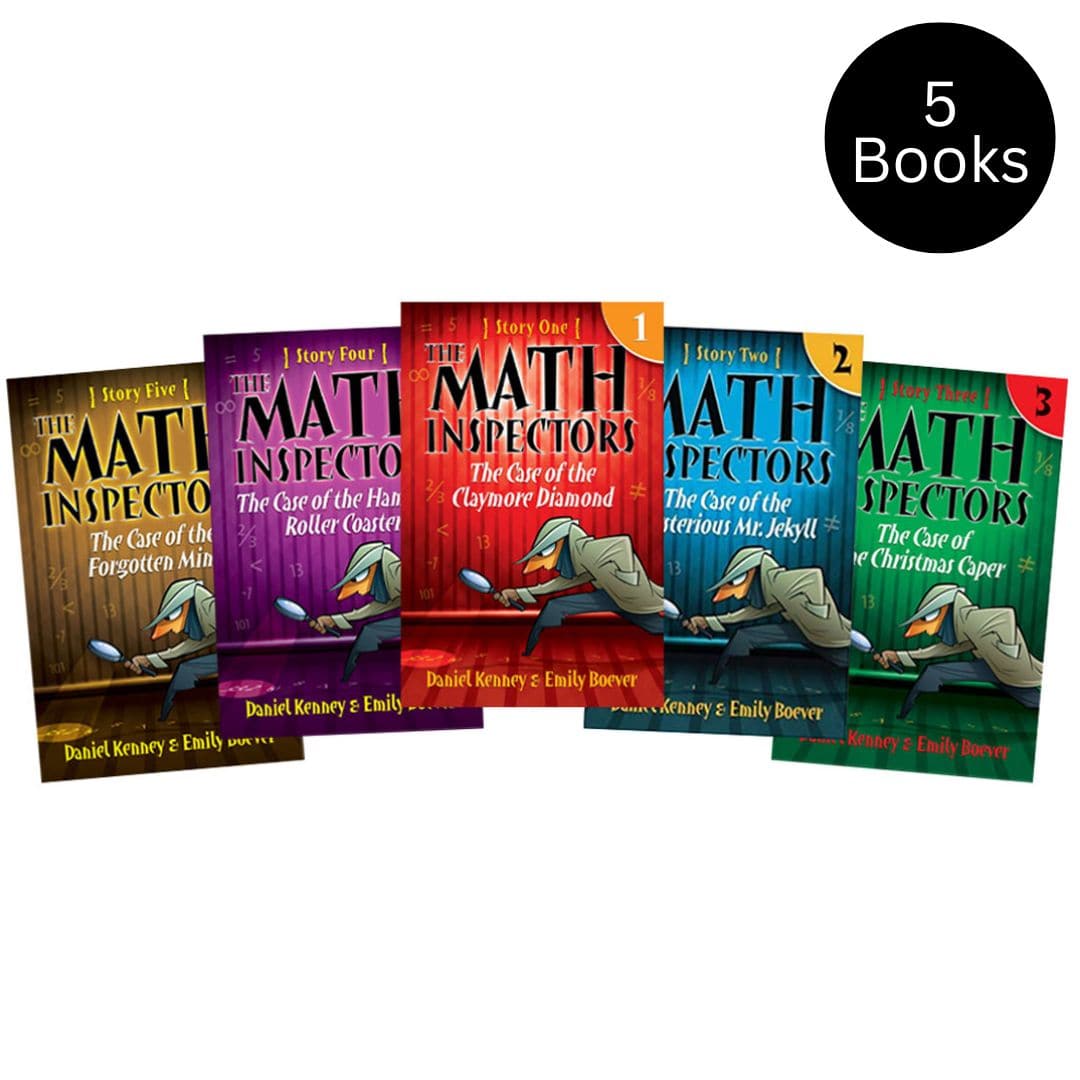
Meet The Math Inspectors Series
If you're looking for engaging math books for kids, The Math Inspectors series is a fantastic place to start.

Rather than teaching math through traditional lessons, the books combine mystery, adventure, and problem-solving into exciting stories that encourage kids to think mathematically.
Readers follow a team of young detectives who use math skills to solve puzzles, uncover clues, and crack challenging cases. As children become invested in the mystery, they naturally practice important math concepts along the way.
Instead of viewing math as something stressful, they begin seeing it as a tool that helps characters solve problems and achieve goals.
Creating a Long-Term Plan for Overcoming Math Anxiety
Reducing math anxiety doesn't happen overnight.
Like any skill, confidence develops through consistent positive experiences. Try focusing on these long-term goals:
1. Build Confidence First
Confidence often comes before improvement.
When children believe they can succeed, they're more willing to attempt challenging problems.
2. Create a Safe Learning Environment
Let your child know that mistakes are part of learning.
Avoid criticism and focus on helping them understand what went wrong.
3. Encourage Curiosity
Ask questions that spark thinking rather than immediately providing answers.
This helps children develop independence and problem-solving skills.
4. Provide Engaging Resources
Mix traditional practice with games, puzzles, educational activities, and books that make math feel enjoyable.
5. Stay Patient
Progress may happen gradually.
Even small improvements in attitude toward math can lead to significant academic growth over time.
When to Seek Additional Help
Sometimes a child struggling with math may need extra support beyond what parents can provide at home. Consider speaking with your child's teacher or seeking support if:
-
Anxiety is significantly affecting school performance
-
Your child consistently falls behind grade-level expectations
-
Homework regularly becomes a source of conflict
-
Emotional reactions to math continue despite your efforts
Early intervention can help keep small challenges from becoming larger obstacles.

Helping Your Child Feel Confident About Math
Learning how to help kids with math anxiety starts with understanding that math struggles don't define your child's potential. Confidence, persistence, and positive experiences can transform the way children approach math.
Remember: the goal isn't getting better math grades.
It's helping your child believe they are capable of solving problems, learning new concepts, and succeeding when challenges arise.
And that confidence will last far beyond the classroom.
Frequently Asked Questions About Math Anxiety
At what age does math anxiety usually begin?
Math anxiety can begin surprisingly early, sometimes as young as elementary school. Negative experiences with math, pressure to perform, or repeated struggles with concepts can contribute to anxiety developing in children as early as first or second grade.
Do math games help reduce math anxiety?
Math games can be very effective because they remove some of the pressure associated with traditional assignments. Games encourage practice, critical thinking, and problem-solving in a fun and engaging environment.
Are math books helpful for reluctant learners?
Absolutely! The Math Inspector series presents mathematical thinking through stories, mysteries, and real-world situations. This can help children engage with math concepts in a low-stress setting while building confidence.
What should I do if my child says they hate math?
Start by exploring why they feel that way. Oftentimes kids who say they hate math actually feel frustrated, embarrassed, or anxious. Focus on building confidence, celebrating effort, and finding enjoyable ways to engage with math rather than forcing additional worksheets.
Can reading improve math skills?
Reading can strengthen problem-solving, reasoning, and critical thinking skills. Books that incorporate mathematical concepts, such as mystery and puzzle-solving stories, can also help children become more comfortable with math in everyday situations.
How long does it take to overcome math anxiety?
Every child is different. Some children show improvement within weeks, while others may need several months of consistent support and positive experiences. The key is focusing on gradual progress rather than immediate results.