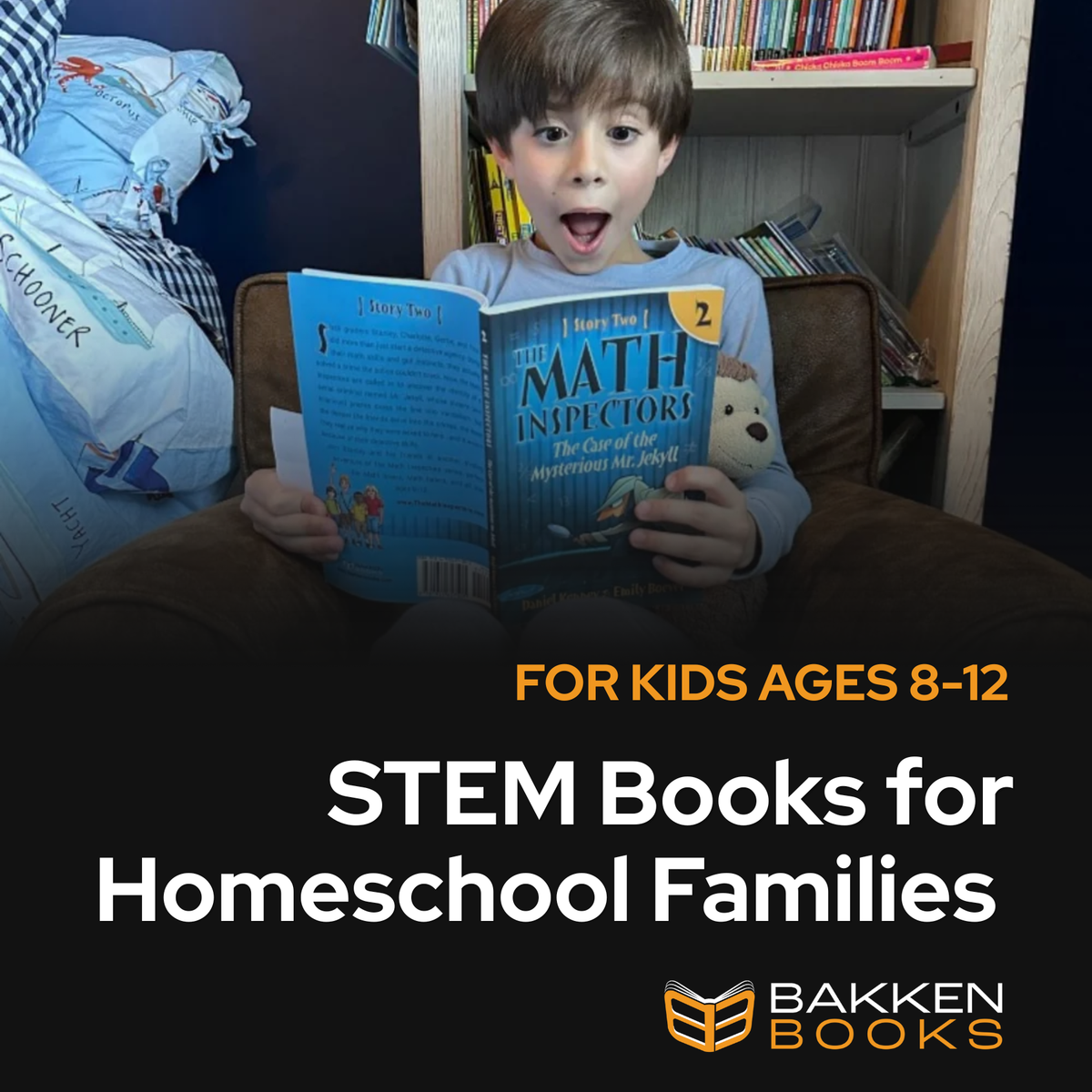
- Why STEM Chapter Books Belong in Your Homeschool Rotation
- Bakken Books' Own STEM Series: Math Inspectors & Science Inspectors
- Other Popular STEM Series Homeschool Families Love
- How to Pick the Right Series for Your Kid
- Find Your Kid's Perfect Book Match in 60 Seconds
- Common Questions About STEM Books for Homeschool Families
Getting a tween to willingly pick up a book about math is basically a homeschool parenting superpower. Getting them to pick up a book about math and beg you for the next one in the series? That's the dream.
The good news is that dream is very achievable.
The right STEM books for kids ages 8-12 don't feel like a worksheet in disguise. They feel like a mystery, an adventure, or a dare.
Below, we're breaking down the best homeschool STEM book series on the market, starting with two reader-favorites from Bakken Books, and rounding out the list with other series homeschool families swear by!
Why STEM Chapter Books Belong in Your Homeschool Rotation
STEM (science, technology, engineering, and math) content doesn't have to live only in your curriculum binder. STEM chapter books for kids work as:
-
Reading incentive + skill reinforcement. Kids practice fluency while quietly absorbing math and science concepts
-
Independent reading blocks that double as light STEM review
-
Read-aloud bonding time that sparks dinner-table conversations about fractions, chemistry, or the scientific method
-
A bridge for reluctant readers, especially STEM-minded kids who find pure fiction boring but love a book with a purpose
The sweet spot for this age group (grades 3–7, roughly ages 8–12) is what educators call "interest-based reading". That's the gap the series below are built to fill.
STEM Series at a Glance
|
Series |
Focus |
Ages |
Format |
Best For |
|
|
Math mystery |
8–12 |
5-book chapter series |
Math lovers, mystery fans, reluctant readers |
|
|
Science mystery |
9–12 |
Ongoing chapter series |
Scientific method, science-curious kids |
|
|
Chemistry adventure |
8–12 |
Chapter series |
Kids into experiments & hands-on chemistry |
|
|
STEM problem-solving |
6–10 |
Early chapter series |
Younger STEM readers, tech + coding themes |
|
|
Science + adventure |
8–12 |
6-book series (National Geographic) |
Adventure/spy fans who also love real science facts |
|
|
Hands-on projects |
9–12 |
Nonfiction activity book |
Kids who want to build, not just read |
(Scroll down for the full breakdown of each.)
Bakken Books' Own STEM Series: Math Inspectors & Science Inspectors
Bakken Books built its whole mission around one idea: kids read more when the book matches their actual interests. These two flagship series are the proof.
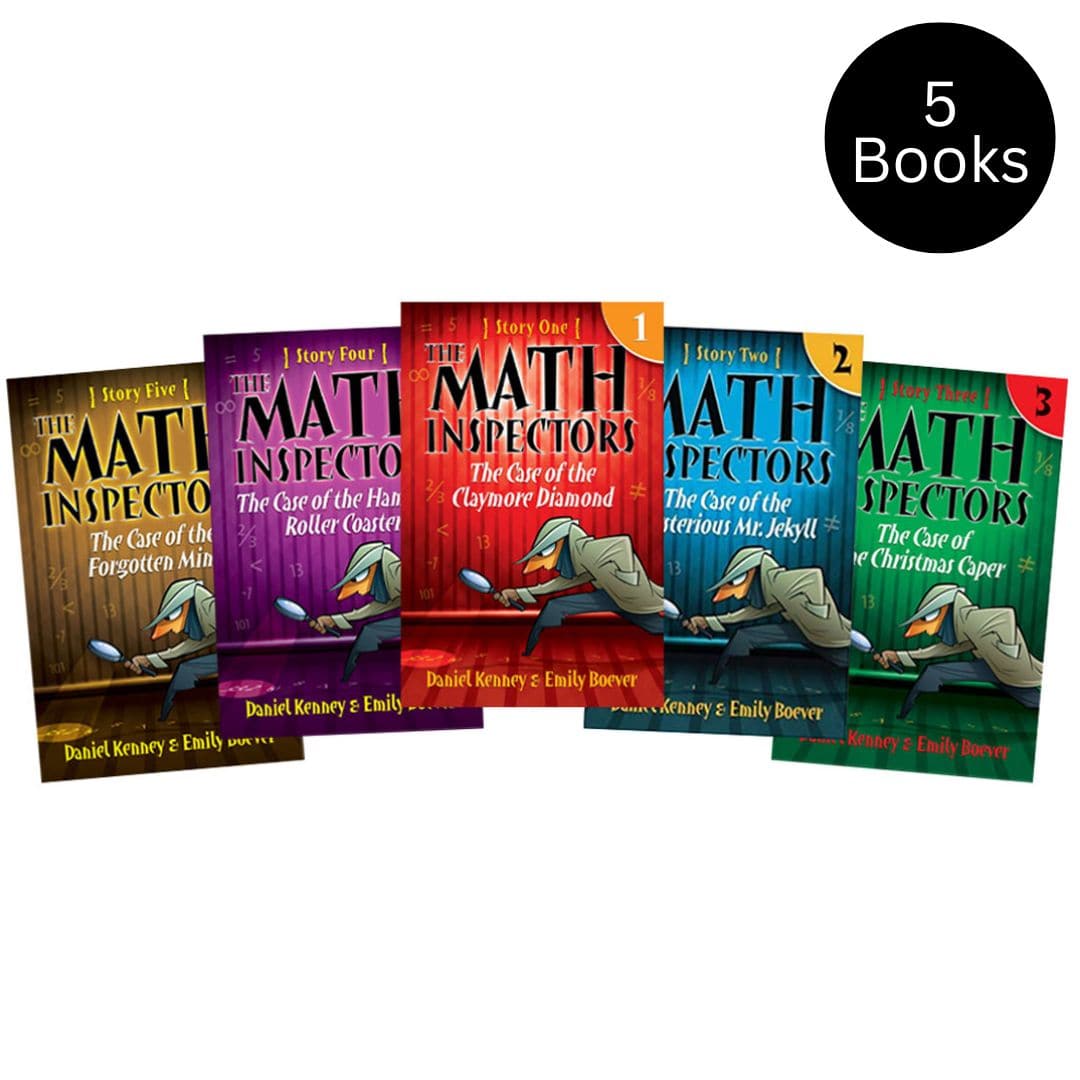
The Math Inspectors
Meet Stanley, Charlotte, Gertie, and Felix, four ordinary twelve-year-olds who use math as their secret weapon for cracking neighborhood mysteries.

The Math Inspectors is a mystery series for ages 9-12 about a group of twelve-year-old friends who use their love for math as a crime-fighting weapon, with five books in the series, each roughly 150 pages long.
Why homeschool families love it:
-
Interest-based hook. Every case is solved through math, so kids who "hate reading" but love numbers get pulled in fast.
-
Bite-sized chapters designed to give reluctant readers that quick hit of "I finished a chapter!" progress.
-
Four relatable characters that most kids find one they identify with immediately.
-
Word problems mixed into the story (not as busywork), so math practice sneaks in naturally.
-
Reading level sits around a 620–650 Lexile range, grades 4–7, which makes it a solid fit for both on-level and slightly-below-level readers who want age-appropriate content.
The lineup:
As an extra, get The Math Inspectors’ bonus questions and answer keys for FREE!
The Science Inspectors
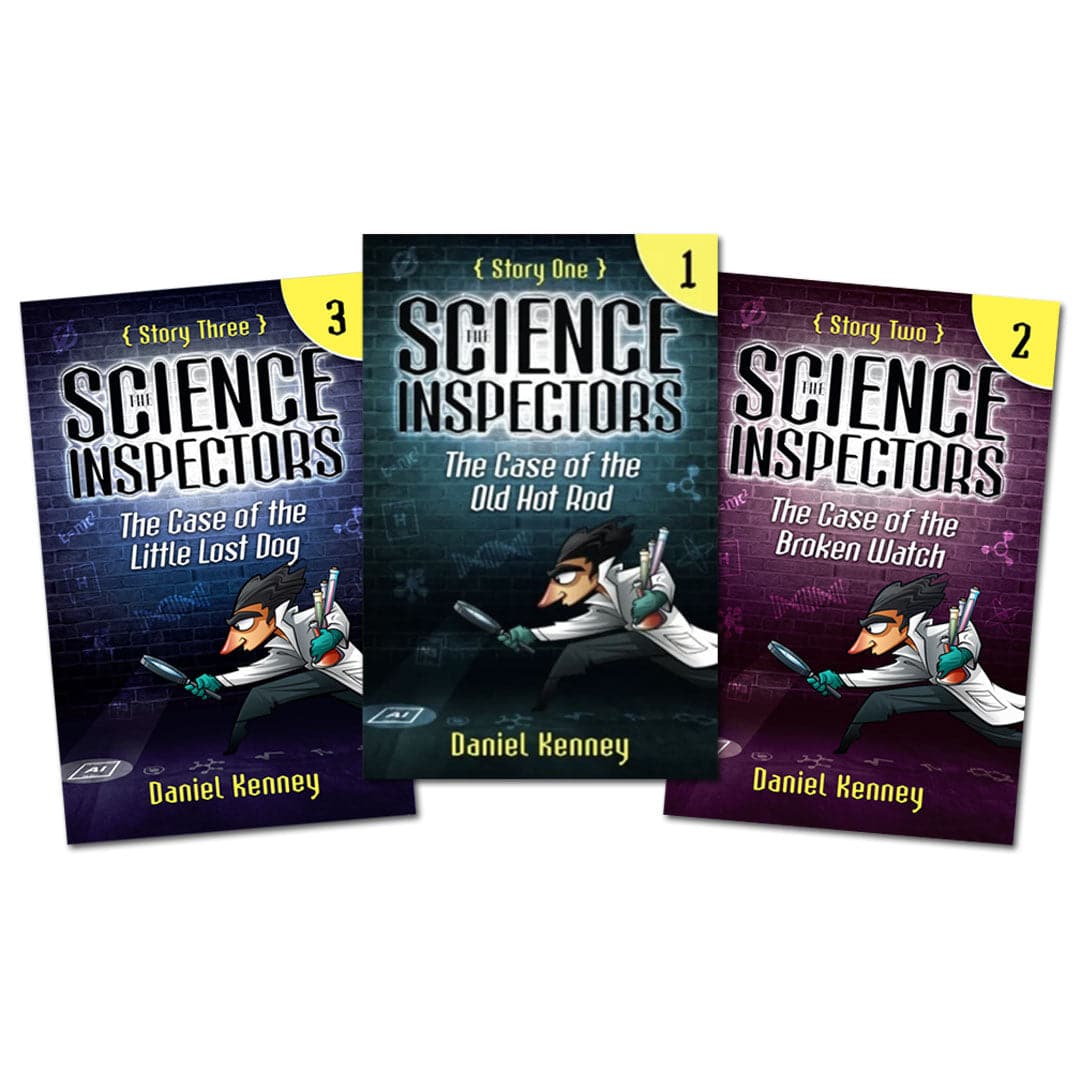
The Science Inspectors swaps math for the scientific method!

Angela Moretti, Howie Doohan, Norah Sloan, and Jamie McDermott band together to crack cases using science instead of guesswork, introducing the scientific method while reinforcing school-taught content, with relatable characters and short, easy-to-read chapters, for ages 9–12, grades 4–8.
Why it works for STEM-minded homeschoolers:
-
Every mystery is solved through observation, hypothesis, and testing.
-
Great companion to an elementary science curriculum, since kids see the process of science applied to something fun instead of a lab worksheet.
-
Described as perfect for "science lovers and science haters" alike and built to hook kids who don't think of themselves as science kids yet.
The lineup starts with:
+ More as the series continues!
Homeschool tip: Pair The Math Inspectors with your math block and The Science Inspectors with a unit on the scientific method. They work great as a "book of the week" independent reading assignment that reinforces what you're already teaching!
Other Popular STEM Series Homeschool Families Love
Bakken's mystery-driven series aren't the only game in town, and a well-rounded homeschool STEM shelf usually mixes a few styles.
Here are the other names that come up again and again in homeschool circles:
Kate the Chemist

Written by real-life chemistry professor Dr. Kate Biberdorf, this series follows a ten-year-old chemist solving science problems in her community. Great pick for kids who want the "why" behind chemical reactions explained by someone who actually does this for a living.
Ada Lace, on the Case

Ada Lace, on the Case is an early-chapter STEM series (skews slightly younger, ages 6–10) about an eight-year-old inventor who solves neighborhood mysteries using science, math, and tech.
Written by an MIT grad and TV science correspondent, it’s a nice on-ramp before kids move up to Math/Science Inspectors-level content.
Explorer Academy (National Geographic)

These reads are part spy-thriller, part science lesson. Follows Cruz Coronado at an elite academy for young explorers, layering real Nat Geo science facts into an action-adventure plot. A favorite for kids who want adventure first, STEM second.
STEM Lab / Maker Lab

Less "story," more "build it yourself."
These books are nonfiction and project-based, packed with hands-on experiments like wind-up cars, musical instruments, and structural engineering challenges. Perfect for the kid who reads the book and then heads straight to the garage.
STEM Book Series Comparison Chart
|
Series |
Narrative Style |
STEM Focus |
Reading Level |
Book Cover(s) |
|
Mystery/fiction |
Math |
Lexile 620–650, Gr. 4–7 |
 |
|
|
Mystery/fiction |
Scientific method |
Lexile 610–670, Gr. 4–8 |
|
|
|
Fiction |
Chemistry |
Middle grade |
|
|
|
Fiction |
Tech/coding/science |
Early chapter |
|
|
|
Adventure fiction |
General science |
Middle grade |
|
|
|
Nonfiction |
Hands-on/engineering |
Middle grade |
|
How to Pick the Right Series for Your Kid
Here's the honest truth: the "best" STEM book series is the one your specific kid will actually pick up on a random Tuesday without being asked twice.
Here are a few quick questions to ask yourself:
-
Does my kid want a mystery to solve, or do they want to build something with their hands?
-
Are they drawn more to math and logic puzzles, or to experiments and hypotheses?
-
Do they need shorter chapters to stay motivated, or are they ready for a longer, adventure-driven plot?
-
Is this for independent reading practice or a read-aloud you'll enjoy together?
If you're not sure, we’ve got your back.
Find Your Kid's Perfect Book Match in 60 Seconds
Stop guessing which series will actually get opened after dinner.
We built a free 60-second reading interest quiz that matches your child to the right series based on what they're actually into, whether that's mystery, math, science, sports, the outdoors, and more.
Take our 60-Second Quiz and get a personalized book match for your reader today!
Common Questions About STEM Books for Homeschool Families
Are chapter books a good way to teach STEM concepts at home?
Yes! Interest-based chapter books reinforce concepts like the scientific method, basic algebra, and problem-solving through narrative, which helps kids retain ideas better than isolated worksheets. They work well as a supplement to (not a replacement for) a core math or science curriculum.
What reading level are the Math Inspectors and Science Inspectors books?
The Math Inspectors sit around a 620–650 Lexile range for grades 4–7, and The Science Inspectors sit around 610–670 for grades 4–8, making both a strong fit for confident middle-grade readers, ages 8–12.
How do I know which STEM series my child will like?
The fastest way is matching the series to your child's existing interests (mystery, science experiments, adventure, sports) rather than just their reading level. Our Bakken Books 60-second quiz matches kids to a series based on interest, not just age or grade.
Are these books good for reluctant readers?
Yes, series like The Math Inspectors are specifically designed with short chapters and relatable characters to help reluctant readers feel a sense of progress, which is one of the biggest factors in getting a hesitant reader hooked.
Can I use STEM chapter books alongside my homeschool curriculum?
Absolutely. Many homeschool families use these series as independent reading time, read-alouds, or a fun companion to a math or science unit.